


January, 2002 I felt a rising sense of gravity as I was driven toward Manhattan. I'd just completed my engagement with Slanted Fedora Entertainment's Star Trek convention at the Meadowlands in New Jersey. The skyline of Manhattan was clearly visible in the crisp, mid-morning light. I saw the elegantly tapered silhouette of the Empire State Building once again dominant as the tallest structure on the horizon. The vacancy in that skyline was heartrending. It was almost as if I were being driven to visit the grieving family of a deceased friend - except that I, too, was a member of that family.
As we emerged from the Lincoln Tunnel into the relentless hurley-burley of 42nd Street, it was almost comforting to be engulfed by the familiar New York assault on the senses. Neon lights blazed in broad daylight. Traffic noise blared in competition with each other. And the unyielding mass of humanity still poured through the streets with determination. New York was resiliently, vibrantly alive.
 The next morning, I went on my pilgrimage to "Ground Zero," the place of the devastated remains of the World Trade Center. There was a long line to the viewing platform that had been built just east of the site. It snaked past the wrought iron fence surrounding the cemetery of old St Paul's Chapel dating back to 1780. The fence had become a grieving wall covered with photos, letters, Christmas wreaths, and other offerings posted in memory of the deceased and missing. They were bright, young people with ascendant careers. They were seniors ready to enjoy retirement. They were janitors and restaurant workers. They were people with names of every ethnicity in the world. When I read a letter addressed to "My little brother, our dearest son," my emotions wouldn't be contained. Tears ran cold down my cheeks. Snowflakes were falling softly. They reminded me of the ashes that fell from the sky that horrible September morning.
 When I reached the platform, I was stunned by the sheer enormity of the site. Sixteen acres of barrenness where once there had been structures teeming with the energy of global commerce and the two tallest office towers in the United States -- all only memories now. In their place was a vast emptiness. Only a great hole in the ground with a tangled mess remained. Tractors moved somberly among the rubble, clearing the wreckage. Only the day before, the remains of another person had been found. Surrounding this huge void were scarred, soot covered, vacant buildings, some covered with black netting like shrouds of mourning. That snowy January morning, I relived in my mind and bore witness to the horror and pain of the morning of September 11, 2001.
I bore witness to the results of that dreadful day, but I know New Yorkers who actually lived through the terrors of the atrocity. Through friends with the Asian American Legal Defense and Education Fund, I arranged to have lunch with one of the heroes of September 11th, Officer David Lim of the Port Authority Police Department. A native New Yorker, he told his story in the punchy accent distinctive of Queens. Officer Lim is with the Canine Patrol in the World Trade Center. He was in the basement of the South Tower with his dog named Sirius inspecting the incoming cars when his walkie-talkie crackled that there was an explosion in the North Tower. His first thought was that someone had gotten a bomb past them up into the building.

He left his dog in the basement kennel and ran to the North Tower. On pure adrenaline, he rushed up 44 floors past fleeing people in roughly 20 minutes. There were office workers still sitting at their desks too stunned to react. Officer Lim went from floor to floor making sure everybody got out. He was in the stair well at around the 27th floor, when the whole building started to vibrate and rumble. It was the South Tower, which had been hit second but collapsed first, coming down. The North Tower was still upright. He urgently needed to get everyone out quickly. Officer Lim continued bellowing at the top of his voice, "Down is good. Down is good." When he reached the fifth floor, suddenly the entire building began to shudder with an indescribable sound combining an approaching train with an avalanche. He heard the snapping of pipes and cracking of concrete together with the deafening roar as they began to fall. He remembered thinking, "If I'm gonna die, please God, make it fast." Then there was silence. Miraculously, he and two other officers found themselves together and alive, trapped in a pocket. They were imprisoned in that cranny for about five hours before they were able to claw their way out. He ended his story by telling us, "My dog died in the collapse of the South Tower. I know exactly where Sirius is. They still haven't gotten to him yet."
I had dinner with Stan Honda, a photojournalist friend, who took photographs of the attack on the World Trade Center that have now become iconic. His picture of an African American woman completely covered in ash, looking shell-shocked and almost ghost-like, staggering away from the wreckage was published in virtually every newspaper and magazine in the world. Fortune Magazine used his photo of the ash-coated businessman, still in full suit and tie, still carrying his briefcase, on its cover. As I reminisced with Stan about my trips to New York in the early 70's, noting on each flight the progress of the steel skeletons of the World Trade Center as it worked its way 110 stories up into the sky, he shared with me his panic working frenetically as the great structures came roaring down.
A photo exhibit titled "Faces of Ground Zero" opened at Grand Central Station while I was in New York. I made a date to get together with my actress friend, Pat Suzuki, for lunch and a viewing of the exhibit. The display was made up of bigger than life-size photos of the heroes of the tragedy taken with a giant camera the size of a small room. The oversized images of people that we would ordinarily call "common guys" -- firefighters, police officers, medical workers, spouses of those that didn't survive, and others -- were profoundly moving. They were "common guys" caught in an extraordinarily uncommon situation who rose to the full challenge of the occasion with uncommon valor. They were the faces of the muscles and energy of working New York. They were the faces of the diversity of New York -- Hispanic, white, black, Asian and, yes, Middle Eastern. They were indeed, the faces of American resolve and American unity. Those faces and the quotes accompanying them were, at once, deeply touching and so uplifting. Over lunch, Pat revealed to me that for a couple of months, she had gotten up at 4 a.m. in the morning to volunteer as a breakfast cook for the rescue workers at ground zero. It seems all New Yorkers were involved in one way or another. They are all kindred.
After New York, I flew to Park City, Utah, for the Sundance Film Festival. I had worked on a small, independent film titled, "Noon Blue Apples" last year and it was to be premiered as part of the festival. I had been to the Venice Film Festival in Italy twice but this was my first visit to Sundance. What a contrast! It was as dramatic a difference as snow and water, as distinct as skis and gondolas.
However, there are also similarities. Both are storybook cities. Both places look like movie sets - one a floating Italian Renaissance capital turned popular tourist destination, the other an old western mining town turned ski resort. The energy, excitement, tensions, and partying are exactly the same. The overwhelming choices of film screenings are dizzyingly alike. Deal making seemed to be going on everywhere at Sundance, in restaurants, bars and even street corners. "Noon Blue Apples" is a psychological thriller by independent filmmaker Jay Lee with a fine performance by young actress, Lauren Fox. A member of the cast, actor Montel Williams, has a chalet in Park City and threw a lavish party for the cast, crew, press, and distributors. Jay and his producer sister, Angela Lee, were energetically wooing potential distributors.
During my four days at Sundance, I gorged myself on movies - from midnight screenings to early morning shows. But, like gorging on food, constant movie going can cause cinematic indigestion. I ingested some discomforting movies. Among them, however, were gems that I enjoyed greatly. "Love in the Time of Money" and "The Laramie Project" were impressive films with wonderful performances. But the very last movie I saw at Sundance before I left for the airport was the best. It was a 9 a.m. screening of an independent film starring Robin Williams titled "One Hour Photo." It was the highlight of my Sundance movie-going experience. First time feature director Mark Romanek had given Robin Williams his most challenging opportunity to stretch his creative muscles. And he rose fully to the challenge with a brilliant characterization of a sad and chilling loner. I predict that both Mark Romanek and Robin Williams will be Academy Award contenders next year.
Twitter user @Rich_Cooper stated:
"Dear feminists. You either get equality or chivalry. You can't have both."
One user responded:
"I'll take equality. I don't need special treatment."
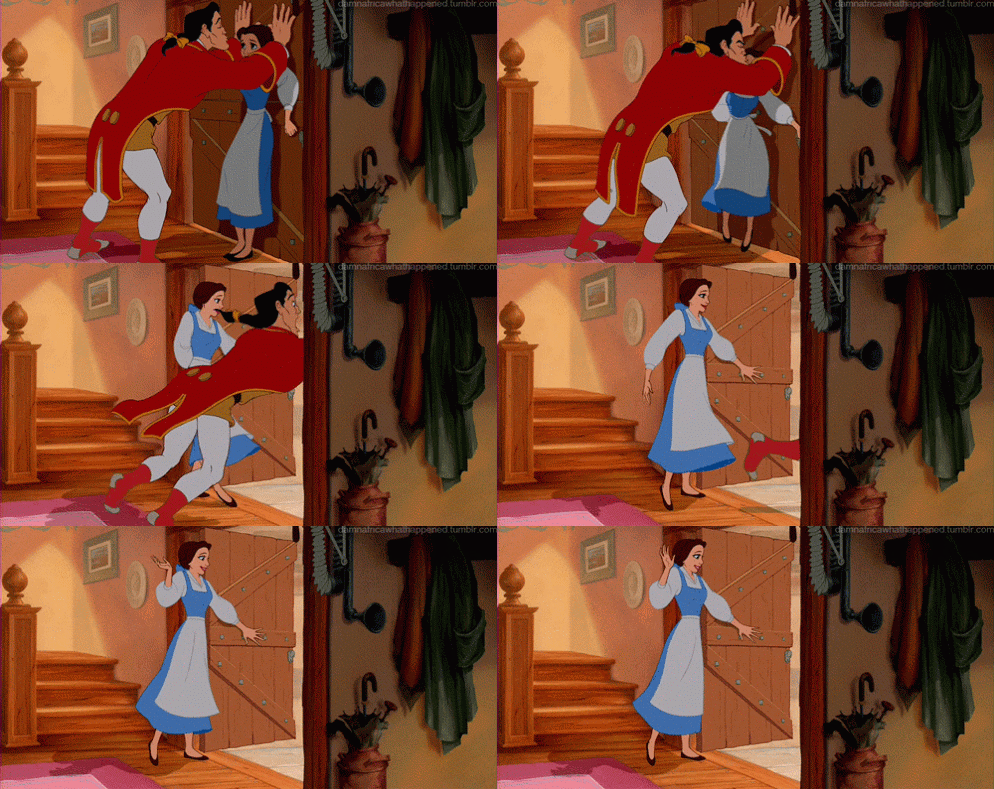
Cooper's rhetorical question did not go over so well. Both women and men expressed their disdain for his message.
One male user observed that chivalry was irrelevant and treating everyone with kindness and respect was compulsory.
"What people care about is caring, empathic [sic], considerate, thoughtful people, NOT whether THEIR door is held for them or THEIR meal is paid for them."
"Are there gender stereotypes in het[erosexual] dating? Sure. But that's separate from being a warm, giving, caring, grounded person."
Some women got right down to the point.
The notion of chivalry and equality are mutually exclusive and not a lot of people thought it was a major priority for feminists.
Common courtesy is not chivalry.
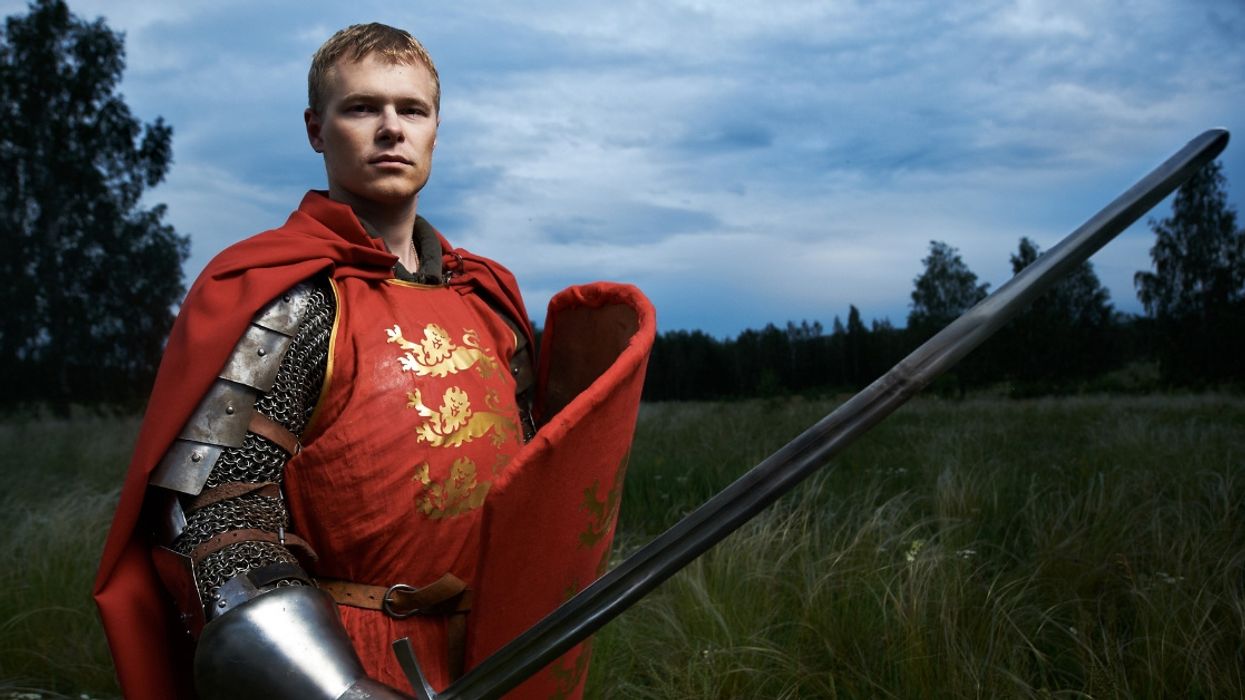
This user pointed out the fact that chivalry stems from a history of men outdoing other men. The concept had very little to do with women.
"Chivalry is a medieval concept of men dressing to impress other men. It has little to do with equality."
"Some men were on top, other men were beneath them. Historically, women were rarely invited into the process."
Neil Bradley described the outdated concept of chivalry as one that implies men being superior to women in a September 8, 2017, article for Medium publications.
"Examples: opening the door for a woman, paying for a woman's meal, gesturing for a woman to go first. The justification is either that women are not physically as strong (to open the door), able to provide (pay for their own meal), or are more deserving of compassion than men (allowing women to go first)."
Bradley also added that he wants to treat others the way he wants to be treated and asked if that approach should be motivated by chivalry or equality.
"If the genders are to be considered equal and treated equally, how a man treats a woman will essentially be the same as how a man treats a man."
"The obligation to open the door, pay for the meal, and let women go first vanishes. Men do not do this to other men, therefore why do it for women?"
His final take was that the two concepts can't co-exist. Either one is chivalrous or treats everyone as equals.
At the end of the day, people were happy to show chivalry the door.
H/T - GettyImages, Twitter, Indy100, Medium
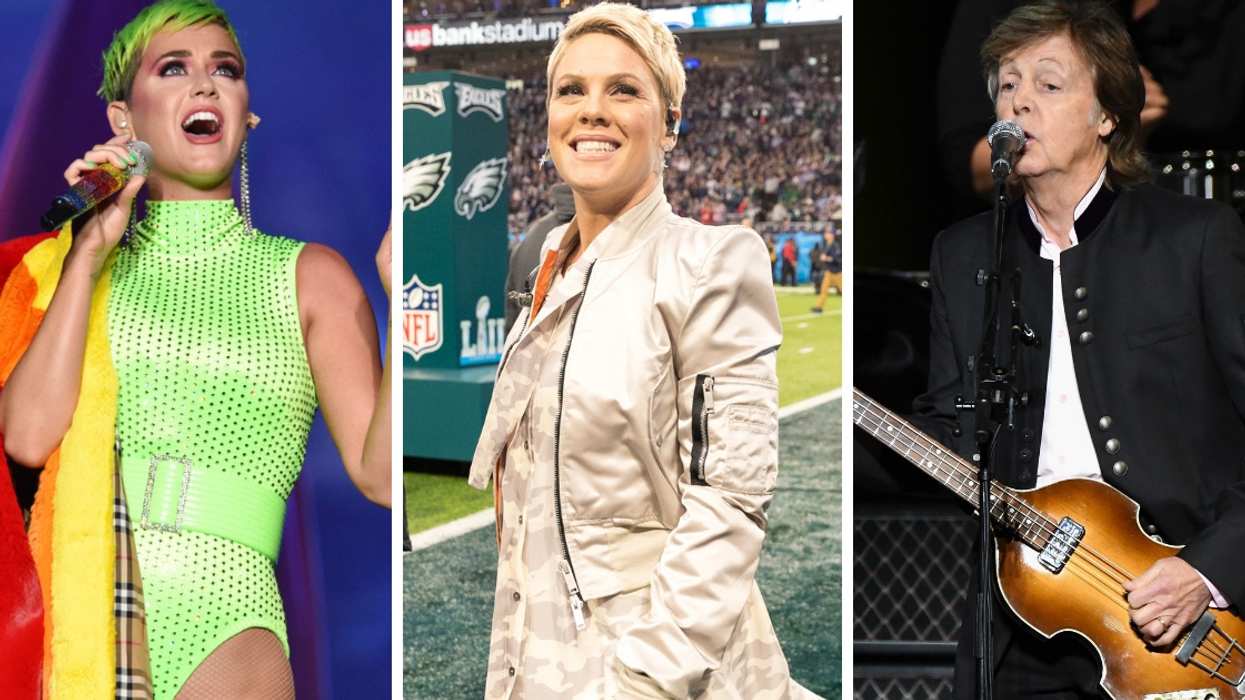
Hundreds of artists have signed a letter threatening a boycott if SiriusXM's parent company, Liberty Media, doesn't back down from opposing the Music Modernization Act.
The act, which was expected to pass through Congress, streamlines royalty payments in the new age of digital technology, but it seems SiriusXM is objecting to a small section that would have the satellite radio company paying royalties on recordings dating before 1972.
That's a whole lot of songs and a whole lot of money the company is hoping to skip out on paying, but not if stars like Paul McCartney, P!nk, Stevie Nicks, Sia, Carly Simon, Gloria Estefan, Mick Fleetwood, Don Henley, Max Martin, and Katy Perry can help it.
The letter read, in part:
I'm writing you with grave concern about SiriusXM's opposition to the Music Modernization Act (Classics Act included).
We are all aware of your company's objections and trepidation but let me say that this is an opportunity for SiriusXM to take a leadership position. As you are aware, 415 Representatives and 76 Senators have already cosponsored the MMA along with industry consensus. It's SiriusXM vs all of us. We can either fight to the bitter end or celebrate this victory together. Rather than watch bad press and ill will pile up against SiriusXM, why not come out supporting the most consequential music legislation in 109 years? We do not want to fight and boycott your company but we will as we have other opponents. Stand with us! Be brave and take credit for being the heroes who helped the MMA become historic law! Momentum is building against SiriusXM and you still have an opportunity to come out on the right side of history. We look forward to your endorsement but the fire is burning and only you can put this out.
SiriusXM resoponded with a letter of their own:
Over the past several weeks, we have been the subject of some stinging attacks from the music community and artists regarding our views on the Music Modernization Act. Contrary to new reports and letters, this is really not about a SiriusXM victory, but implementing some simple, reasonable and straightforward amendments to MMA. There is nothing in our "asks" that gut the MMA or kills the Act. So let's talk about the substance of the amendments we propose, because we truly do not understand the objections or why these concepts have incited such a holy war.ontrary to the accusations, SiriusXM has proposed three simple amendments to the MMA.
First, SiriusXM has asked that the CLASSICS Act recognize that it has already licensed all of the pre-1972 works it uses. This amendment would ensure that artists – the people who are supposed to be at the heart of the MMA – receive 50% of the monies under those existing licenses. Is that unfair? Just today, Neil Diamond wrote in the LA Times that: "I receive a small amount of songwriting royalties, but no royalties as the recording artist." How can that happen? To date, SiriusXM has paid nearly $250 million dollars in pre-'72 royalties to the record labels. We want to make sure that a fair share of the monies we have paid, and will pay, under these licenses gets to performers. Without this provision, artists may never see any of the money SiriusXM paid, and will pay, for the use of pre-1972 works. Artists not getting paid hurts our business!
Second, Sirius XM thinks that the fair standard to use in rate setting proceedings is the standard that Congress chose in 1995 and confirmed again in 1998 – which is called the 801(b) standard. However, we are willing to move the "willing buyer/willing seller" standard contained in the MMA. In exchange, we have asked for the same concession that the MMA grants to other digital music services, but we were left out of — simply that the rates that were set last year for five years now apply for ten years. We thought this was a fair compromise when we read the "new" MMA that was released this weekend by the Senate, and are willing to live by that compromise.
Third, SiriusXM is asking the simple question: "Why are we changing the rate court evidence standard for musical compositions in this legislation so that it gives another advantage to broadcasters over satellite radio and streaming services?" There is no policy rationale for this change to tilt the playing field further in their favor, and frankly no one has been able to explain it to us. It is only fair that we debate why the change to Section 114(i) is in the MMA.
Did you all catch that? It sounds like lawyer speak for "we don't really want to say where we stand."

It seems all the letters were for naught. The Music Modernization Act passed in the U.S. Senate.
It was time to celebrate and dance in the streets.
As the saying goes, honest pay for honest work.