






November, 2005 Pat Morita gave me a pain in my sides. His jokes were non-stop and relentless. I would be laughing, helpless and in pain. But he was merciless. His gags kept coming like machine-gun bullets. He would "slay" me with his jokes. Wherever we were, at dinner in a Las Vegas restaurant, at a party in Los Angeles, a fund-raiser for a non-profit institution, Pat kept me in pained laughter.
Now there is a different pain. It is the ache of parting. Pat is gone. He passed in Las Vegas of natural causes. Yet, it seems unnatural for Pat not to be bringing us joy and laughter. He was always so vibrant, so funny, and so alive. Noriyuki Pat Morita was a beloved friend and an extraordinary man.
He was extraordinary in that Pat was of a generation of Asian Americans that rarely ventured into show business. It was an insecure and inhospitable arena for Asian performers. Yet, with his passion and his gift of humor, he boldly ventured forth into that unpromising world.
He was extraordinary in his determination. Building a career was a constant struggle. The roles offered him were largely stock stereotypes that he turned into comic gems. His stand-up gigs in nightclubs were where he really flourished, opening for star like Ella Fitzgerald, Della Reese, and Smokey Robinson. He shared the bill with Redd Foxx at the Apollo Theater in Harlem. He was brilliant - he "slayed them," as he would say, with his comedic genius.
Yet, his iconic creation was a dramatic role. That of the karate master, Mr. Miyagi, in "The Karate Kid." It takes an actor with enormous humanity to fill a character so richly with such charm, spirit, and moral fiber. His Mr. Miyagi had the gentle humor that comes with wisdom combined with humility. He had the firm discipline of martial artists. He had the resilience of someone who survived unjust incarceration in an U.S. internment camp in the blistering sun of an Arizona desert. He embodied the amazing patriotism of an American who went from behind those barbed wire fences to fight heroically for his country. Pat Morita, with his extraordinary talent, made Mr. Miyagi the Japanese American Everyman. Pat infused that role with his joy, his sorrow, and his life struggles. Mr. Miyagi is a singularly American character personified uniquely by Pat Morita. I was blessed and proud to have had him as a dear friend.
I last saw him in San Francisco two months ago when we were both inducted into the Japanese American Hall of Fame. He was shockingly frail. I had to help him into cars and down stairs. But, his indomitable jokes were as relentless as ever. My laughter almost made me drop him on occasions. They were precious days we had together in San Francisco and I cherish them.
Since then, we talked on the phone. Now he is gone and I feel an unfamiliar pain. It is not the kind of pain I associate with Pat. But, this too is now a part of Pat.
We all feel this pain Pat, we who loved you, because you gave us so much. You gave us laughter and joy and the appreciation of life. Thank you, Pat, for your gloriously painful gift.


Twitter user @Rich_Cooper stated:
"Dear feminists. You either get equality or chivalry. You can't have both."
One user responded:
"I'll take equality. I don't need special treatment."
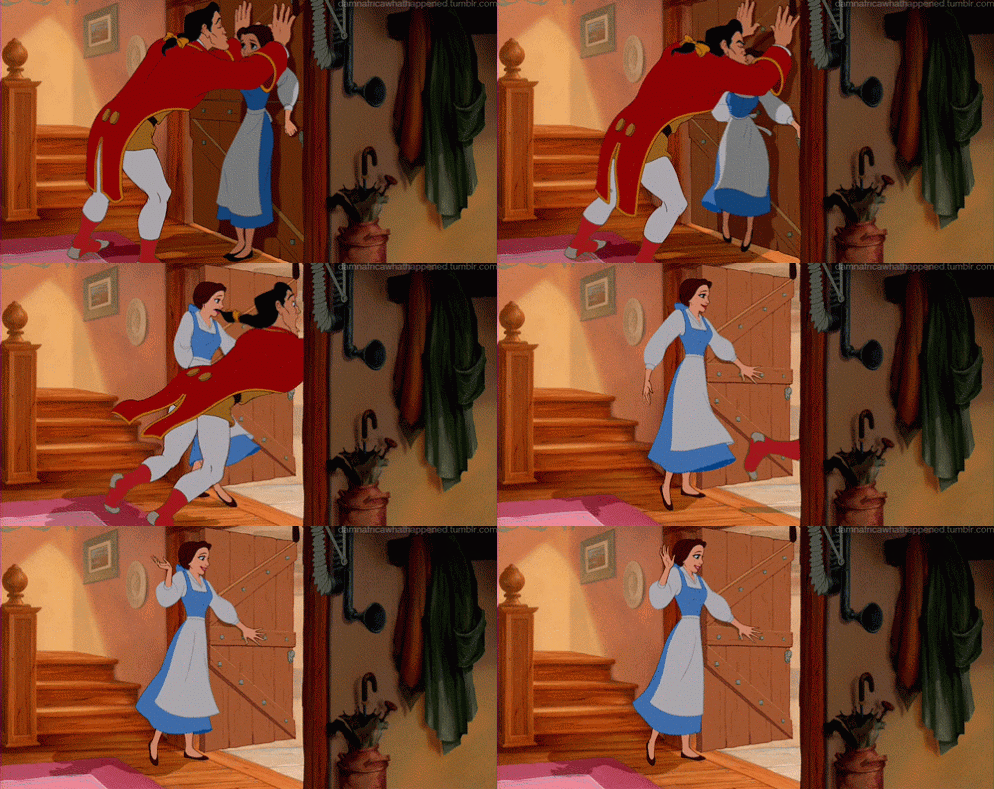
Cooper's rhetorical question did not go over so well. Both women and men expressed their disdain for his message.
One male user observed that chivalry was irrelevant and treating everyone with kindness and respect was compulsory.
"What people care about is caring, empathic [sic], considerate, thoughtful people, NOT whether THEIR door is held for them or THEIR meal is paid for them."
"Are there gender stereotypes in het[erosexual] dating? Sure. But that's separate from being a warm, giving, caring, grounded person."
Some women got right down to the point.
The notion of chivalry and equality are mutually exclusive and not a lot of people thought it was a major priority for feminists.
Common courtesy is not chivalry.
This user pointed out the fact that chivalry stems from a history of men outdoing other men. The concept had very little to do with women.
"Chivalry is a medieval concept of men dressing to impress other men. It has little to do with equality."
"Some men were on top, other men were beneath them. Historically, women were rarely invited into the process."
Neil Bradley described the outdated concept of chivalry as one that implies men being superior to women in a September 8, 2017, article for Medium publications.
"Examples: opening the door for a woman, paying for a woman's meal, gesturing for a woman to go first. The justification is either that women are not physically as strong (to open the door), able to provide (pay for their own meal), or are more deserving of compassion than men (allowing women to go first)."
Bradley also added that he wants to treat others the way he wants to be treated and asked if that approach should be motivated by chivalry or equality.
"If the genders are to be considered equal and treated equally, how a man treats a woman will essentially be the same as how a man treats a man."
"The obligation to open the door, pay for the meal, and let women go first vanishes. Men do not do this to other men, therefore why do it for women?"
His final take was that the two concepts can't co-exist. Either one is chivalrous or treats everyone as equals.
At the end of the day, people were happy to show chivalry the door.
H/T - GettyImages, Twitter, Indy100, Medium
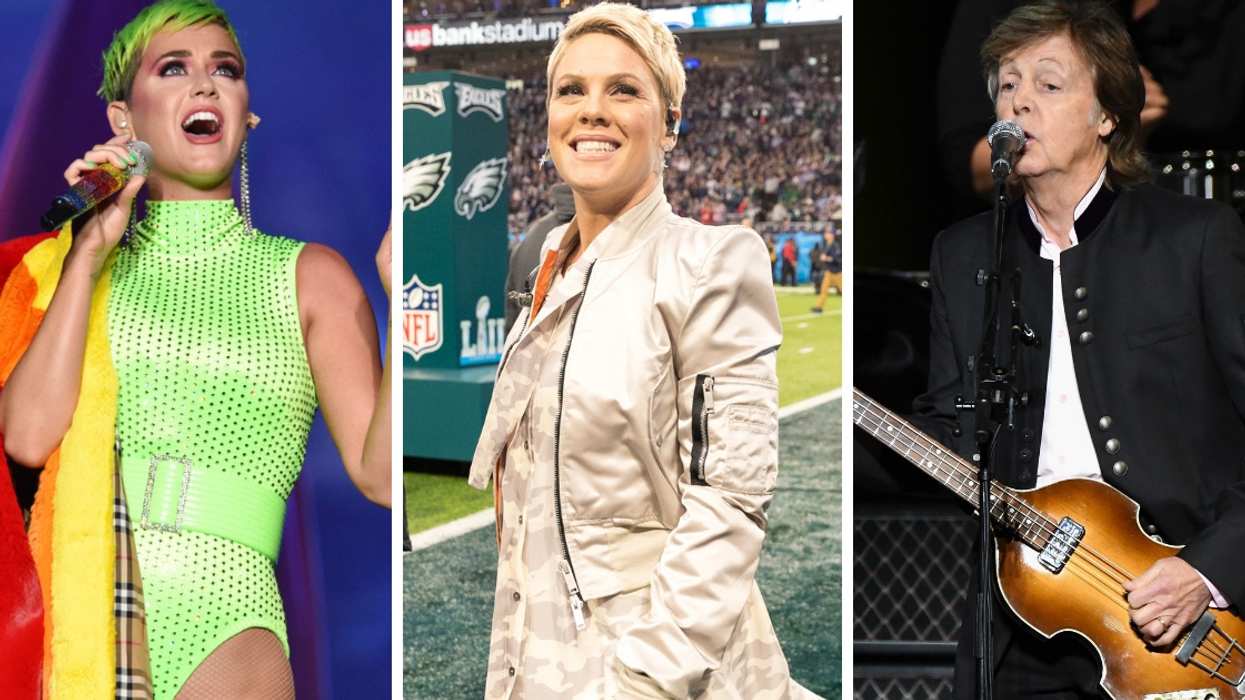
Hundreds of artists have signed a letter threatening a boycott if SiriusXM's parent company, Liberty Media, doesn't back down from opposing the Music Modernization Act.
The act, which was expected to pass through Congress, streamlines royalty payments in the new age of digital technology, but it seems SiriusXM is objecting to a small section that would have the satellite radio company paying royalties on recordings dating before 1972.
That's a whole lot of songs and a whole lot of money the company is hoping to skip out on paying, but not if stars like Paul McCartney, P!nk, Stevie Nicks, Sia, Carly Simon, Gloria Estefan, Mick Fleetwood, Don Henley, Max Martin, and Katy Perry can help it.
The letter read, in part:
I'm writing you with grave concern about SiriusXM's opposition to the Music Modernization Act (Classics Act included).
We are all aware of your company's objections and trepidation but let me say that this is an opportunity for SiriusXM to take a leadership position. As you are aware, 415 Representatives and 76 Senators have already cosponsored the MMA along with industry consensus. It's SiriusXM vs all of us. We can either fight to the bitter end or celebrate this victory together. Rather than watch bad press and ill will pile up against SiriusXM, why not come out supporting the most consequential music legislation in 109 years? We do not want to fight and boycott your company but we will as we have other opponents. Stand with us! Be brave and take credit for being the heroes who helped the MMA become historic law! Momentum is building against SiriusXM and you still have an opportunity to come out on the right side of history. We look forward to your endorsement but the fire is burning and only you can put this out.
SiriusXM resoponded with a letter of their own:
Over the past several weeks, we have been the subject of some stinging attacks from the music community and artists regarding our views on the Music Modernization Act. Contrary to new reports and letters, this is really not about a SiriusXM victory, but implementing some simple, reasonable and straightforward amendments to MMA. There is nothing in our "asks" that gut the MMA or kills the Act. So let's talk about the substance of the amendments we propose, because we truly do not understand the objections or why these concepts have incited such a holy war.ontrary to the accusations, SiriusXM has proposed three simple amendments to the MMA.
First, SiriusXM has asked that the CLASSICS Act recognize that it has already licensed all of the pre-1972 works it uses. This amendment would ensure that artists – the people who are supposed to be at the heart of the MMA – receive 50% of the monies under those existing licenses. Is that unfair? Just today, Neil Diamond wrote in the LA Times that: "I receive a small amount of songwriting royalties, but no royalties as the recording artist." How can that happen? To date, SiriusXM has paid nearly $250 million dollars in pre-'72 royalties to the record labels. We want to make sure that a fair share of the monies we have paid, and will pay, under these licenses gets to performers. Without this provision, artists may never see any of the money SiriusXM paid, and will pay, for the use of pre-1972 works. Artists not getting paid hurts our business!
Second, Sirius XM thinks that the fair standard to use in rate setting proceedings is the standard that Congress chose in 1995 and confirmed again in 1998 – which is called the 801(b) standard. However, we are willing to move the "willing buyer/willing seller" standard contained in the MMA. In exchange, we have asked for the same concession that the MMA grants to other digital music services, but we were left out of — simply that the rates that were set last year for five years now apply for ten years. We thought this was a fair compromise when we read the "new" MMA that was released this weekend by the Senate, and are willing to live by that compromise.
Third, SiriusXM is asking the simple question: "Why are we changing the rate court evidence standard for musical compositions in this legislation so that it gives another advantage to broadcasters over satellite radio and streaming services?" There is no policy rationale for this change to tilt the playing field further in their favor, and frankly no one has been able to explain it to us. It is only fair that we debate why the change to Section 114(i) is in the MMA.
Did you all catch that? It sounds like lawyer speak for "we don't really want to say where we stand."

It seems all the letters were for naught. The Music Modernization Act passed in the U.S. Senate.
It was time to celebrate and dance in the streets.
As the saying goes, honest pay for honest work.