



August, 2002, LOS ANGELES - The pleasant days of summer combined with people's urge to travel seem to be the convivial mix that brings far flung friends and relatives together. A second cousin of mine from Japan, Shunichi Takei, whom I hadn't seen in over a decade, dropped in. He works for Hewlett-Packard Japan and had crossed the Pacific for a meeting at its Silicon Valley headquarters in California. A Fourth of July family get-together at the home of my Orange County relatives, James and Midori Uyeda, followed this.
Flying in from New York were Stan Honda and his wife, Ann Levin, whom I had visited in Manhattan earlier this year. He is the photojournalist who took some of the shots of the World Trade Center horrors that have now become iconic. One of his photos, of a dust-coated and dazed businessman, still carrying his briefcase, became the cover of Fortune Magazine. Another, of a stunned African American woman also completely covered in dust, appeared in newspapers all over the world. The Japanese American National Museum is planning an exhibit of Stan's works in September 2003.
The museum was the attraction for many visitors. A long-time friend, Sarla Joy of Dayton, Ohio, where I had performed in a concert production of Stephen Sondheim's "Pacific Overtures" in June, came to Los Angeles for her first visit to the Japanese American National Museum. She went back to Dayton, not only impressed with the exhibits, but also enthusiastic about lobbying the Dayton Art Institute to invite one of our traveling exhibits there. Another visitor to the museum I was delighted to welcome was Mr. T. Kubota, a representative of the influential Association of Japan Corporations, known in Japan as the Keidanren. He joined us for the festivities surrounding the opening of our newest exhibit, "Passports to Friendship," about the exchange of dolls between the children of Japan and the United States.
Interspersed through the month were travels of my own. One was to San Francisco for a speaking engagement and another to Minneapolis for a Star Trek convention.
 There was a comedy review titled "Triple Espresso" playing at a nearby theater. I'm an addict - not of coffee but of theater. "Triple Espresso" - what hilarious, high-caffeine nonsense! I laughed 'til it hurt. There, I met its producer, Dennis Babcock, who had also produced Leonard Nimoy's play "Vincent" that toured the country. Dennis told me that he is a member of the Charles Dickens' Club of London and that he was going to be there in December. What serendipity! I, too, am planning to be in London in December, I told him. I now seem to have inveigled myself an invitation to join Dennis as his guest at their December dinner gathering to meet the club's honorary chairman, Cedric Dickens, the great grandson of the great Dickens himself, Charles. I thought surprising happy events like this happened only in Dickens novels.
For my summer Hollywood Bowl concert night, I invited local friends that I don't see often enough to share a box with me. My guests were Lynn Arthurs, former chair of East West Players, Tim Dang, artistic director of East West Players, Brian Arthurs, and Darrell Cummings. It was a wonderful summer evening with the Los Angeles Philharmonic and the guest flutist, the incomparable James Galway.
Back on a plane again to gather with friends at another Star Trek convention, this time in Las Vegas. A unique enhancement of this convention was a tribute to Leonard Nimoy - Creation Entertainment's Lifetime Achievement Award.
 There are many accolades given to people who have been successful in their careers. But this one to Leonard was so fitting on so many levels. Certainly, Leonard has been eminently successful as an actor and a director. He has been the recipient of standing ovations, rave reviews, and career honors galore. Leonard and I share a Grammy nomination in the "Best Spoken Word or Non-Musical Recording" category for our work together on a Star Trek audiocassette. He has published his poems and other writings. But a little-known aspect of Leonard that is highly deserving of recognition is his civic spirit and quiet generosity. He and his wife, Susan, have been great philanthropists to many institutions that have enriched the Los Angeles community. The Japanese American National Museum has been a beneficiary of their generosity, as has the Museum of Contemporary Art of Los Angeles. The historic Griffith Park Observatory, now undergoing enormous renovation work high up in the Hollywood Hills, has been a major recipient of the Nimoys' vision and bigheartedness. The new theater that will be a part of the expanded observatory is to be named very appropriately the Leonard Nimoy Theater. This observatory shall truly "live long and prosper."
While in Las Vegas, I got together with old friend Pat Morita and his delightfully witty wife, Evi.
 The restaurant was abuzz with excitement - Mr. Miyagi of the Karate Kid having dinner with Captain Sulu of Star Trek! In the middle of the Nevada desert, fine wine flowed, bottle after bottle. We were the last ones to leave the restaurant. The next morning, I missed my regular sunrise jog.
I returned to Los Angeles just in time to greet my new friend from my "Pacific Overtures" run in Dayton, Ohio, actress Kay Bosse. She played my sweetly conniving murderer mother who poisoned me with her concoction of chrysanthemum tea. I enjoyed my stay in her city, Dayton, so I wanted to reciprocate by showing her how vibrant my hometown, Los Angeles, can be. Of course, the first stop was the Japanese American National Museum. Then, to the birthplace of my city, El Pueblo de Nuestra Senora la Reina de Los Angeles Sobre el Rio Porciuncula. This historic state park includes the charming Mexican shopping street, Olvera Street. The thick walls of the Avila Adobe, the oldest adobe structure in Los Angeles, fascinated Kay. We crossed the street to our great mission style art deco railway station, Union Station, to catch the newest subway system in the nation, our Metro Rail. Along the way to Hollywood, we stopped off at our spectacularly restored Central Library. We stopped for drinks at the trendy rooftop lounge of the newest boutique hotel in downtown Los Angeles, the Standard Hotel. Then, back on the Metro Rail to Hollywood to see the original Star Trek casts' handprints and autographs in the forecourt of Grauman's Chinese Theater and to the new home of the Oscars, the Kodak Theater next door. Dinner was at The Grill, a new restaurant in the spectacular Hollywood and Highland complex.
 Kay's final evening in Los Angeles was a very Hollywood event. The American Cinematheque was celebrating the 20th anniversary of "Star Trek II: The Wrath of Khan" with a screening of the film followed by a panel discussion with its producer, Harve Bennett, director Nick Meyer and two actors, Walter Koenig and me. The historic Grauman's Egyptian Theater, the new home of the American Cinematheque, was filled to capacity. They had to schedule a second screening to accommodate the demand. After the screening, Kay was caught in the crush of Star Trek autograph seekers. She was bumped and shoved ruthlessly as the determined fans tried to get to me. But I suspect she was thrilled by every uncomfortable second of it. As I write this, she is now winging her way back to Dayton. I think she is already planning her next visit to Los Angeles.
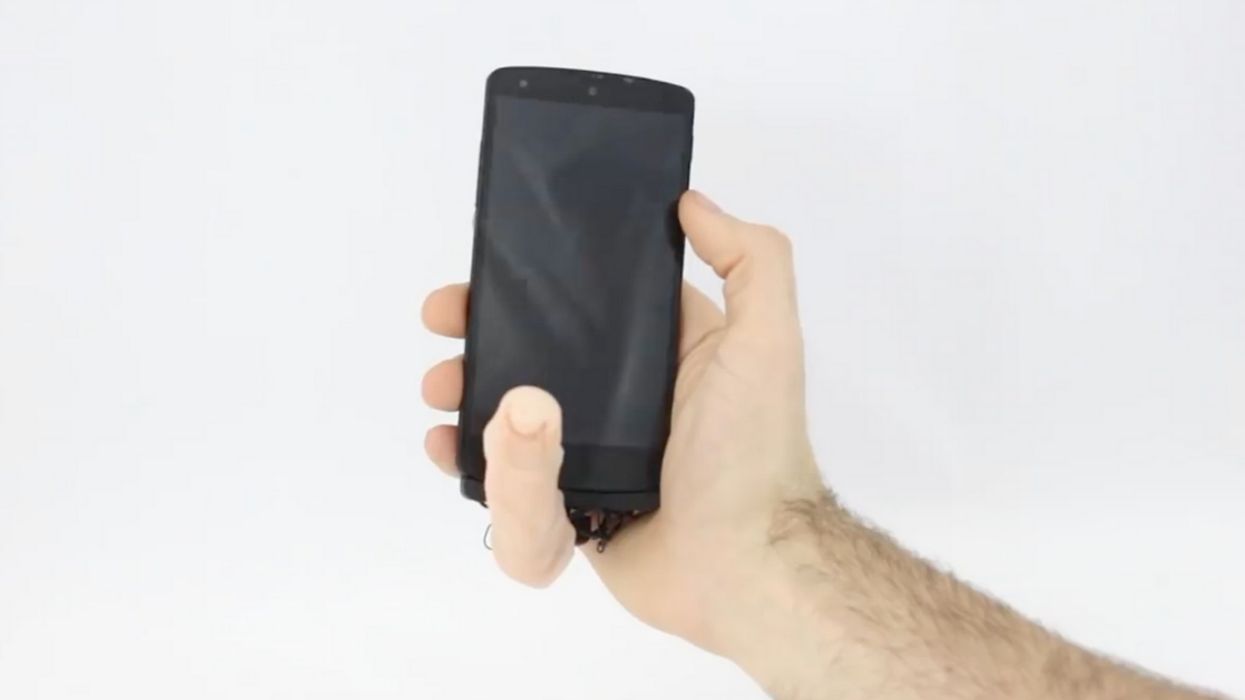
The MobiLimb was created by researchers in France and is made up of "five servo motors, an Arduino microcontroller and a sensor, and it can do a number of unsettling things that are straight out of nightmares," according to Engadget.
Marc Teyssier, a PhD student and one of the researchers behind the project for the dismembered limb, legitimized its existence.
"In the spirit of human augmentation, which aims at overcoming human body limitations by using robotic devices, our approach aims at overcoming mobile device limitations (static, passive, motionless) by using a robotic limb."
Th MobiLimb can prop itself up so you can watch a video, or provide an alternate way to grip your device.
But there's one function that is really disturbing.
The articulated digit can be skinned to resemble a human finger, and it can stroke your wrist while you're using your phone.

Someone implied that single people could benefit from this invention as a companion.
What would the next-generation MobiLimb offer consumers?
The attachment could come in handy should an unfortunate life-changing incident were to occur.
But the gadget is still giving people goosebumps.
Others saw a more erotic potential.
Now here's a function not advertised by MobiLimb's creators.
Feelings are mixed. But the jury is in.
As to why such a creepy gadget was invented, we can't quite put our finger on it. But then, when it comes to consumers' needs, these guys may be out of touch.
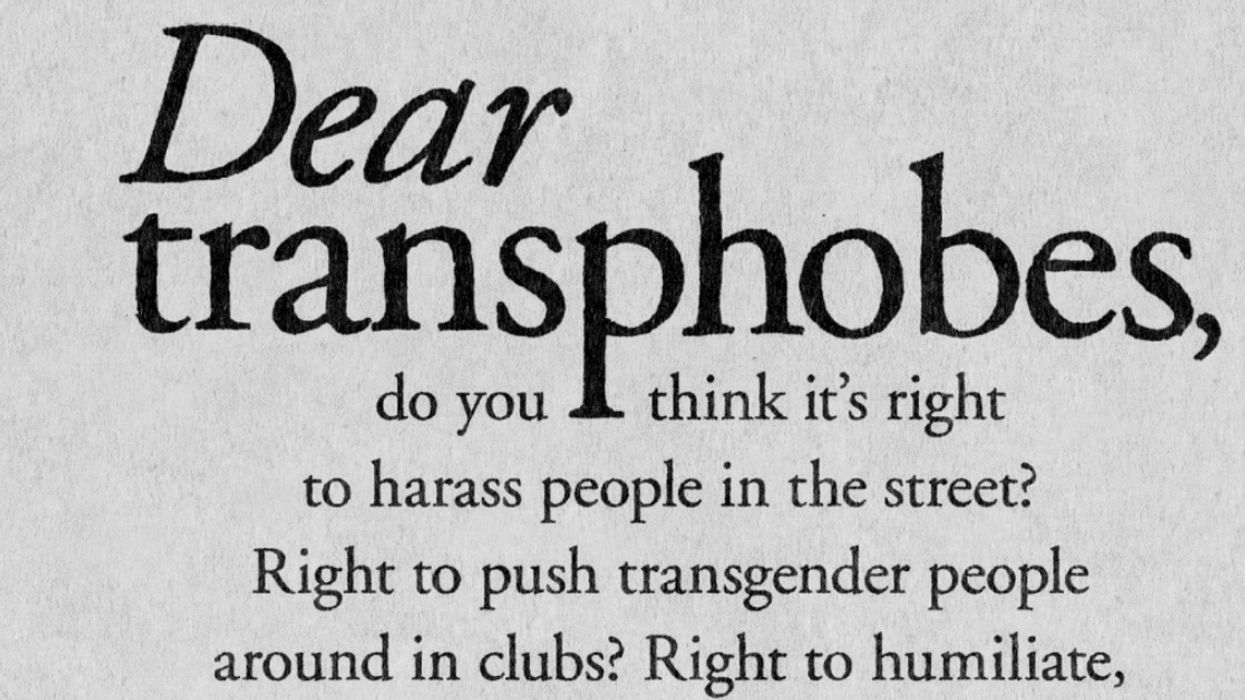
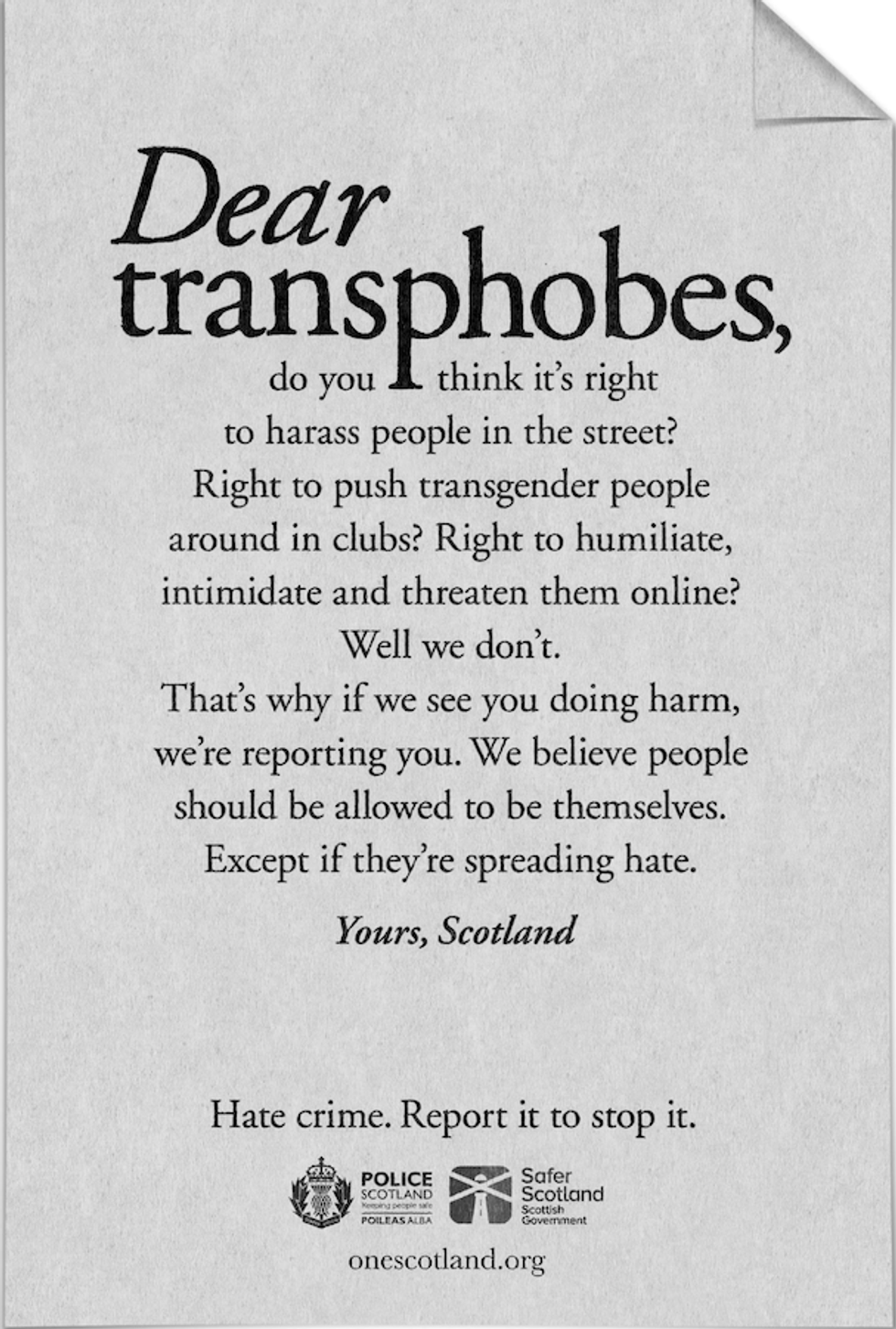
The campaign is part of the Scottish government's One Scotland project in an effort to reduce hate crime.
One letter reads:
"Dear transphobes, do you think it's right to harass people in the street? Right to push transgender people around in clubs? Right to humiliate, intimidate and threaten them online? Well we don't."
"That's why if we see you doing harm, we're reporting you. We believe people should be allowed to be themselves. Except if they're spreading hate."
"Yours, Scotland."
 (
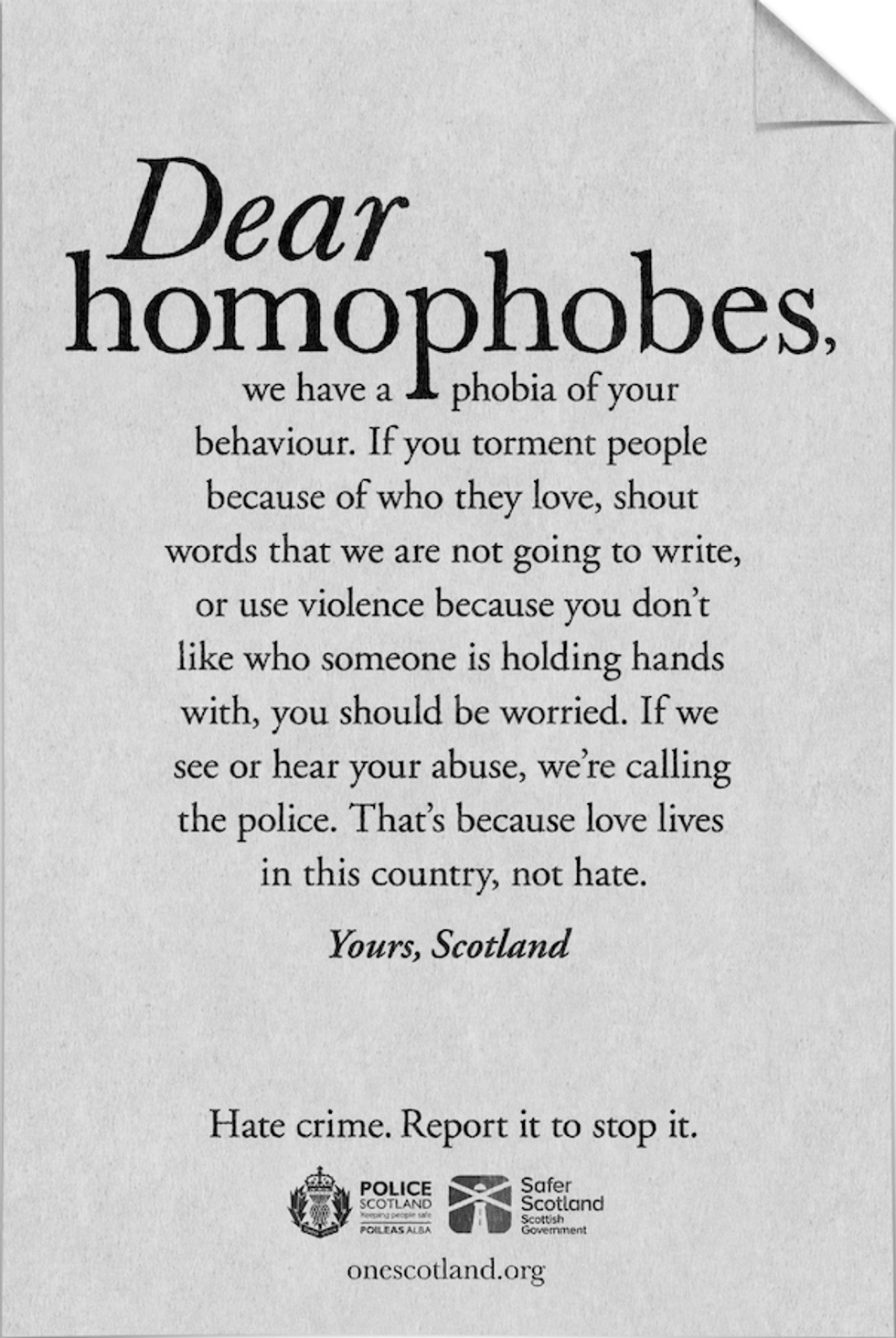
(In another letter, the country says it has a "phobia" of homophobic behavior.
"If you torment people because of who they love, shout word that we are not going to write, or use violence because you don't like who someone is holding hands with, you should be worried."
"If we see or hear your abuse, we're calling the police. That's because love lives in this country, not hate."
"Yours, Scotland."
 (
(One Scotland's website describes the organization as one that aims to continue building an inclusive society while recognizing the significant strides made so far towards equality.
"One Scotland embodies the inclusive society we want in Scotland, where equality and human rights are respected and every individual and minority group feels valued."
The website defines hate crimes as abuse that "can be verbal or physical and has hugely damaging effects on the victims, their families and communities, and we all must play our part to challenge it."
"Police Scotland takes hate crime very seriously. In the last year there were over 5,300 charges of hate crime reported to the Procurator Fiscal in Scotland1."
"However, there are many more incidents that go unreported. We all have a responsibility to report hate crime if we witness it – it's the only way we can challenge it, and put an end to it for good."
Justice minister Humza Yousaf is familiar with being a victim of a bigotry and is encouraging people to call out and report any incidents involving harassment.
"As somebody who has faced Islamaphobic and racial abuse over the years, I know how upsetting being a victim of hate can be. Hate crime and prejudice are completely unacceptable and we are absolutely committed to tackling it."
"We all have a role to play in stamping out prejudice and I would ask anyone who witnesses a hate crime to play their part and report it. Justice agencies such the police and Crown Office will deal sensitively with reports made and people should have confidence in how they will be treated. Last year there were over 5,300 charges of hate crime reported to the Procurator Fiscal in Scotland but there are still many incidents that are going unreported."
Henrietta Mochrie identifies as transgender and has been the victim of repeated harassment and abuse. She emphasized the importance of speaking out against the hatred.
"I'll often get street harassment, sometimes this has escalated to the point where I've been followed by people shouting abuse at me, just because of who I am."
"It makes me feel really down and scared to leave the house. It's important that if you witness hate crime that you report it to take a stand against hate."
One Scotland's ad campaign officially launched on Wednesday.
Hopefully, it won't take too long before other nations follow suit in this bold, yet necessary fight for equality.
H/T - OneScotland, PinkNews, Twitter
Twitter user @Rich_Cooper stated:
"Dear feminists. You either get equality or chivalry. You can't have both."
One user responded:
"I'll take equality. I don't need special treatment."
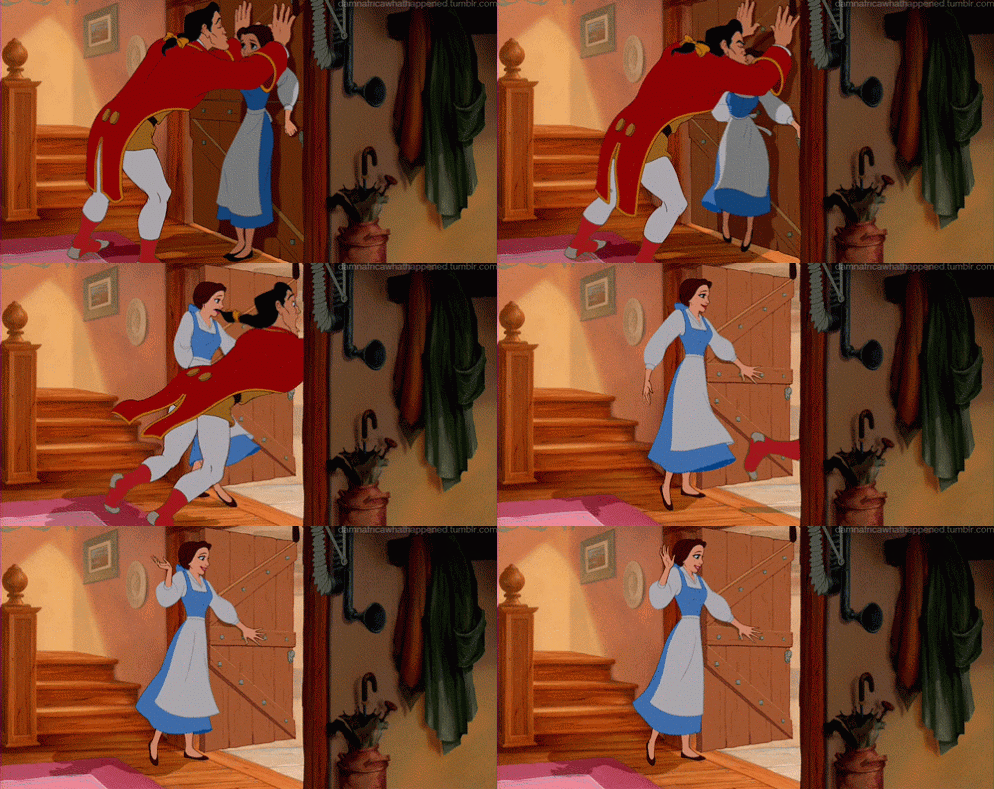
Cooper's rhetorical question did not go over so well. Both women and men expressed their disdain for his message.
One male user observed that chivalry was irrelevant and treating everyone with kindness and respect was compulsory.
"What people care about is caring, empathic [sic], considerate, thoughtful people, NOT whether THEIR door is held for them or THEIR meal is paid for them."
"Are there gender stereotypes in het[erosexual] dating? Sure. But that's separate from being a warm, giving, caring, grounded person."
Some women got right down to the point.
The notion of chivalry and equality are mutually exclusive and not a lot of people thought it was a major priority for feminists.
Common courtesy is not chivalry.
This user pointed out the fact that chivalry stems from a history of men outdoing other men. The concept had very little to do with women.
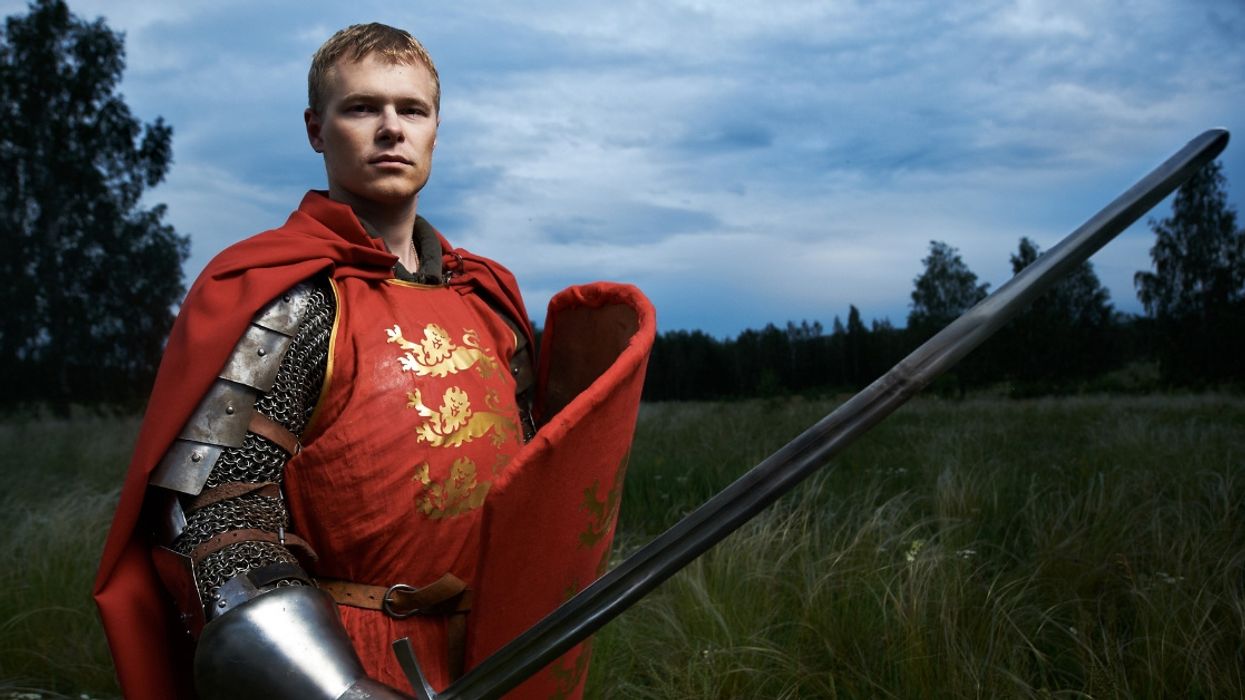
"Chivalry is a medieval concept of men dressing to impress other men. It has little to do with equality."
"Some men were on top, other men were beneath them. Historically, women were rarely invited into the process."
Neil Bradley described the outdated concept of chivalry as one that implies men being superior to women in a September 8, 2017, article for Medium publications.
"Examples: opening the door for a woman, paying for a woman's meal, gesturing for a woman to go first. The justification is either that women are not physically as strong (to open the door), able to provide (pay for their own meal), or are more deserving of compassion than men (allowing women to go first)."
Bradley also added that he wants to treat others the way he wants to be treated and asked if that approach should be motivated by chivalry or equality.
"If the genders are to be considered equal and treated equally, how a man treats a woman will essentially be the same as how a man treats a man."
"The obligation to open the door, pay for the meal, and let women go first vanishes. Men do not do this to other men, therefore why do it for women?"
His final take was that the two concepts can't co-exist. Either one is chivalrous or treats everyone as equals.
At the end of the day, people were happy to show chivalry the door.
H/T - GettyImages, Twitter, Indy100, Medium