










March, 2005, LOS ANGELES - For the last nine months, I have been engaged in a challenging, and, to my surprise, immensely informative charge. Last summer, I was asked to serve on a task force suggested by New York Congressman Charles Rangel and chaired by former Illinois Representative, Cardis Collins, to evaluate a new technology for measuring television viewing - a system called the Local People Meter.
Like all of you, I had known of the Nielsen ratings. For people working in television, the ratings mean life or death. If your rating is good, your show is renewed and you survive for another season. If it's low, your show is cancelled and you find yourself among the unemployed. This recently happened to the latest Star Trek spin-off, "Enterprise." Its low rating killed it.
Yet, I knew very little about how the ratings were arrived at. It was a mystery to me. The Nielsen rating was life or death to us and I didn't know how this murderous and, at other times, life sustaining system worked.
I'd never met anyone in the Nielsen rating pool. So serving on the Independent Task Force on Television Measurement was an eye-opening education. Beyond learning about the Nielsen rating process as it had been practiced, I learned about the new technology being introduced as well as something about technologies yet to come. I learned of the scores of interests, other than those of us involved in television production, that are vitally concerned with the Nielsen rating - advertisers, ad agencies, broadcasters, language groups, statisticians, demographers, researchers, and many other sectors. I was staggered by the huge advertising dollars, in the tens of billions that are determined by the ratings numbers. I learned a lot.
I vaguely knew that the Nielsen ratings had something to do with measuring the television viewing of representative people selected, based on the last census. These individuals would be requested to keep a diary of the shows they watched. Indeed this proved to be the system as it had been. This rating system was based on the assumption that the people selected would be diligent and honest. Most people were but others were not. Even if a person had not watched their favorite show for whatever reason, that person might have written it down in their Nielsen diary just to keep their favorite show's ratings up. There was virtually no way of verifying the accuracy of the diaries.
The technology being introduced - the People Meter - eliminated that unreliability. A device was to be attached to every set in the household; each member of the selected household had a button that he or she was to press when viewing and everything that particular individual watched would be recorded. The device would capture even the channel surfing of that viewer. This was certainly an improvement over the old diary system.
Because today we have so many channels and so many choices, inevitably the ratings of the big networks were affected. In the days when we had a limited number of options, the big networks had massive numbers. Now, with so much competition, some of the big networks numbers, inevitably, were adversely impacted. Some of those affected networks challenged the precision of the People Meter count. There also was the allegation that minority audiences were not accurately counted. Thus, the Independent Task Force on Television Measurement was formed to make an objective assessment of the accuracy of the People Meter system.
The Task Force met and received testimonies from many individuals representing myriads of interests. We met with them throughout the country. We formed committees to address specific areas of concern. Because the members were located throughout the country, there were countless telephonic meetings. The members of the Task Force worked tirelessly and collegially. We listened to the many testimonies; made findings and crafted recommendations for improvements to the accuracy of the measurement. After nine months of dedicated work, the report of the Task Force on Television Measurement was completed in March. Those interested in looking over the full report can download it here and get more information on the Nielsen ratings by clicking www.everyonecounts.tv. Our Report has been well received. Nielsen has accepted the Report and our recommendations. Nielsen has already implemented many of the recommendations and others soon will be.
My time with the Task Force has been personally enriching. I now have a deeper appreciation of the complexity of our dynamically transforming society both technologically and demographically.
Demographically, the ethnic population of this nation is growing not only explosively but also in multifaceted combinations. Caribbean Africans may be Black but culturally Spanish speaking Latino Blacks. Asians from South American countries like Peru or Argentina are likewise Spanish speaking. The population from the Middle East is growing rapidly in certain parts of the country. Blacks from Africa are now adding to the mix of languages spoken in the United States. Intermarriages are creating a myriad ethnic and language combinations. Children of these intermarriages are forging new self-identities. The buying power of these groups is rising faster than that of the non-ethnic population. The measurement of television viewing by such complex and diverse audiences is becoming increasingly challenging and Nielsen has been developing technologies to meet that challenge. The Local People Meter is a step in that direction.
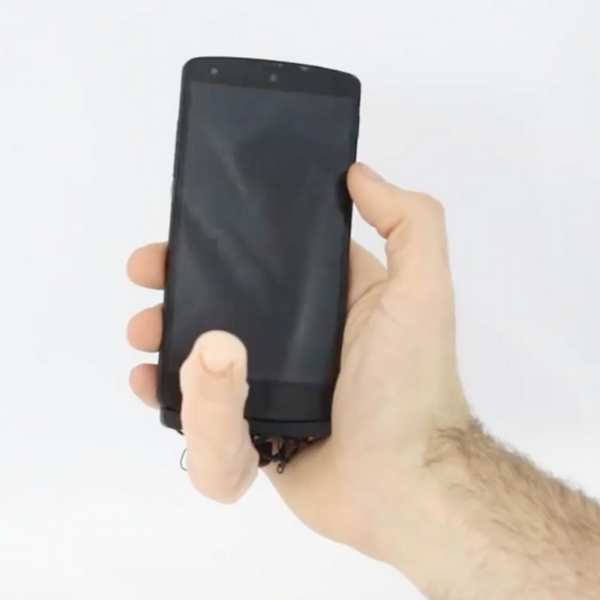
However, technology is adding to the complexity. Advances in technologies like digital video recorders, Tivo, and others allow the audience not only to determine when they view a show, but also to fast-forward right through the commercials that pay for the shows. This is of critical concern to advertisers who pay enormous sums for their ads. I learned that we will soon be seeing people selected to wear cell-phone-like devices called the Portable People Meter that will not only capture the shows and their accompanying ads that they see at home, but wherever they happen to see television, whether at a bar, a friend's home or on the street. Yet to come are devices that not only will capture the shows seen but the purchases that individual makes by registering the bar-code information of the product bought. Further, these devices will also record the time it took for an individual to make a purchase after they first saw the ad. I don't think Star Trek ever explored this frontier or the boundaries of privacy that technology approaches. What a fascinating Star Trek script that would make!
People Are Roasting Trump Over His Mind-Numbing Observation About The Wetness Of Water 😂

Donald Trump thanked the first responders who came to the aid of victims of Hurricane Florence. The storm devastated portions of North Carolina, dumping massive amounts of rain and damaging millions of dollars in property. Many natural areas were destroyed, some farmers lost everything and more than a few people have been left homeless. The first responders after this massive storm were literal life savers, and Trump was absolutely right to thank them. Unfortunately, the sentiment of his message was lost for many people because he didn't seem to put any effort or preparation into what he was saying. Then, in the middle of his off-the-cuff message, he confused everyone by talking about the wetness of water.
As Trump described the storm and the importance of first responders he told the world:
This is a tough hurricane, one of the wettest we've ever seen from the standpoint of water. Rarely have we had an experience like it and it certainly is not good.
The Tweet went out in the middle of the day on Tuesday, September 18th. At the time of this article, it hasn't even been up for 24 hours and already has over 13,000 comments. Many of them pointed out how Trump didn't even seem to try...
and how asinine his description was.
We don't know if Trump will continue to address the public by releasing these kinds of videos, or if they will continue to be as unrehearsed as this one is. We assure you, if they are, Twitter will have plenty to say about it.
H/T: Huffington Post, Twitter
The Kids From 'Stranger Things' Wrapped Presents For Superfans—And Did A Delightfully Terrible Job 😂

When it comes to giving gifts, not all celebrities are as crafty as Taylor Swift, but that didn't stop the adorable stars of Netflix's Stranger Things from giving it a try.
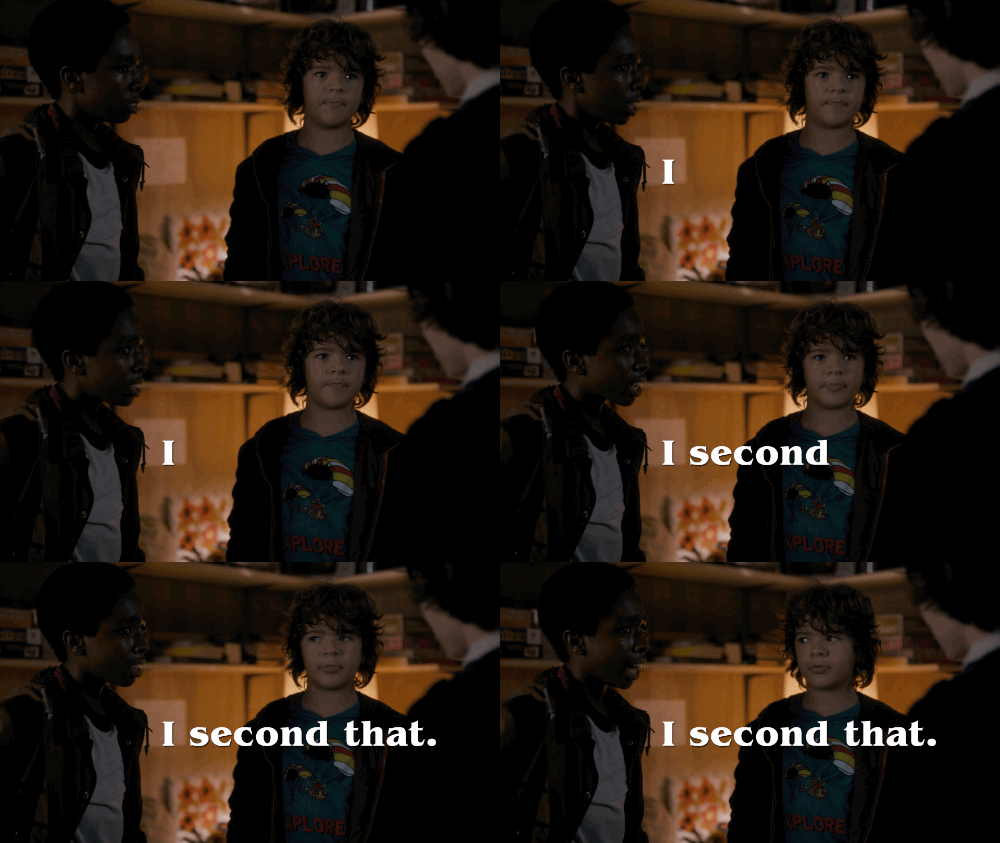
In a recently released video from Netflix, actors Millie, Finn, Noah, Caleb, Gaten, and Sadie got together for some holiday cheer and to wrap gifts for fans. But kids will be kids, even if they star in a hit television show. Watch as chaos ensues.
Fans loved every moment, even if the kids weren't the greatest wrappers.
We just can't get enough of these talented kids!
Arkansas High School Suspends Student Paper For Publishing 'Disruptive' Investigation Into Shady Football Transfers
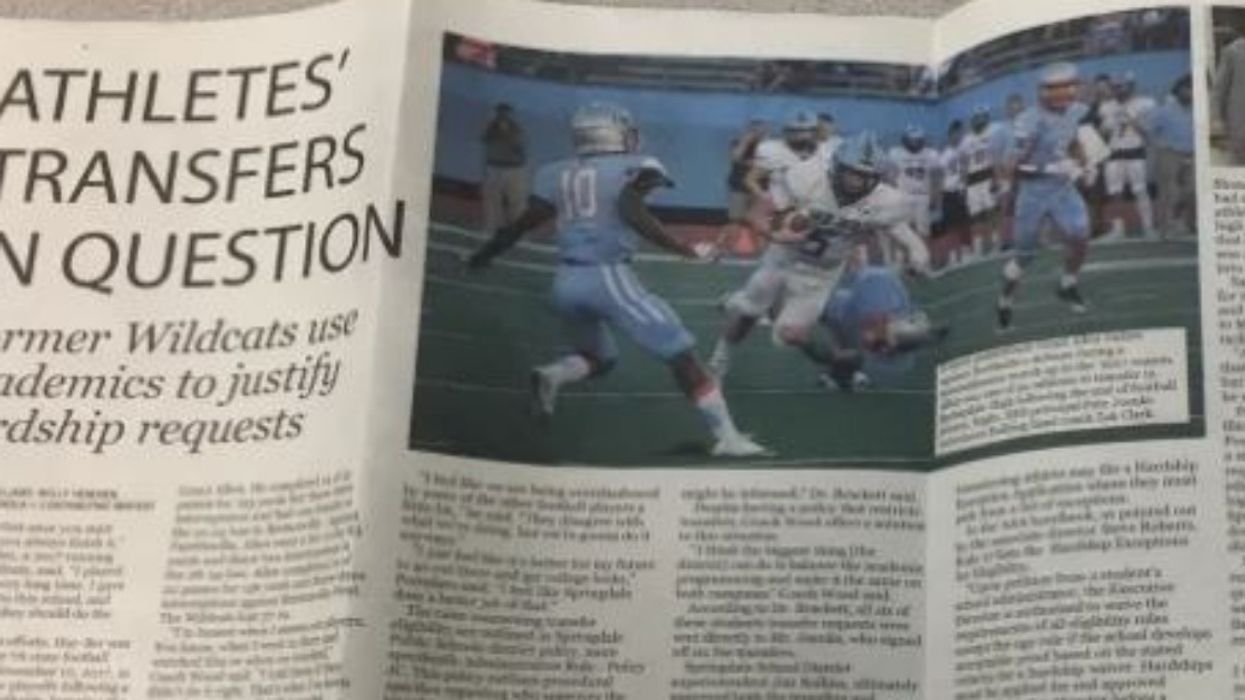
Halle Roberts is the editor-in-chief of the Har-Ber Herald, the school newspaper for Springdale High School in Arkansas. The 17-year-old student was suspended after she wrote an investigative piece criticizing the transfer of five football players to a rival school.
Players are not allowed to be transferred to a different school because they would like to play for a different team. They are allowed to transfer only for academic reasons. So Roberts got to digging. Her paper filed FOIA requests and received official information from the Arkansas Activities Association saying that the students were transferred for academic reasons. However, the students themselves said otherwise.
Roberts quoted one student in her paper saying:
"We just want to go over there because we have a better chance of getting scholarships and playing at D1."
Another student told Roberts:
"I just feel like it's better for my future to go out there and get college looks."
Soon after the report was published, the superintendent of the district, Jim Rollins, asked the teacher advisor for the school paper, Karla Sprague, to take the story down. She obliged.
Rollins wrote a letter stating that the piece was:
"intentionally negative, demeaning, derogatory, hurtful and potentially harmful to the students addressed in those articles."
Roberts, undeterred, is still working on a new edition of the story that includes the school's censorship.
Mike Hiestand of the Student Press Law Center had this to say:
And Halle Roberts, who dreams of being an ESPN reporter, stated:
People were impressed with Roberts.
Some had harsh words for the school's administration.
And most had high praise for Roberts and the other student journalists working on this piece.
And Halle Roberts herself closed by saying:
Fight on, Halle!
This Store Clerk's Reaction To A Stolen Sneaker Prank Should Earn Him Employee Of The Month
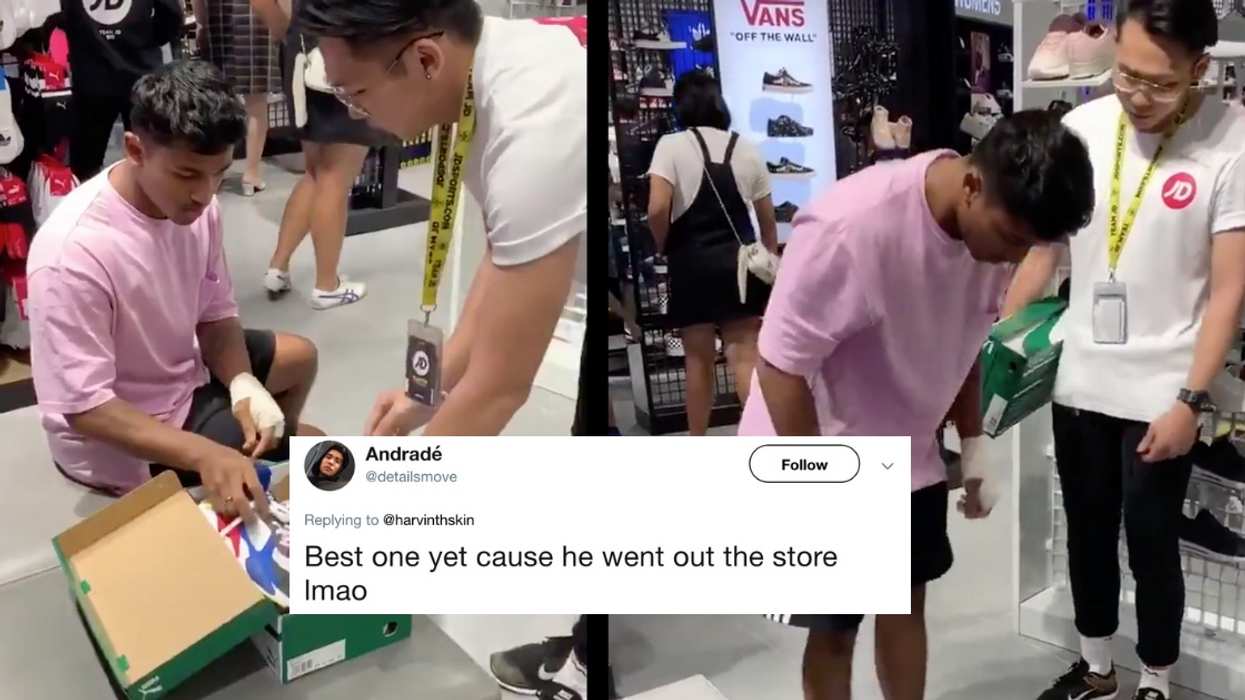
Twitter user @HarvinthSkin decided to give a sales associate as his local shoe store a heart attack with a silly prank. All over the internet, people are sharing the prank and sending their well-wishes to the poor worker who experienced a moment of pure panic!
Don't worry too much about the unfortunate sales employee, however—it turns out he was given a raise as a consolation shortly thereafter!
The owner of the shoe store made clear to Skin that his employees were not to be messed with.
On Twitter, people loved the sales clerk's reaction to Skin running out of the store.
Some thought they may have reacted differently in the same situation...
But everyone got a good laugh out of the innocent prank.
The incident also gave us some priceless reactions!
Remember, everyone: it's important to try before you buy!