




December, 2002, LOS ANGELES - This is the beginning of the last month of the year and it's a good time to pause, reflect, and take measure of the events that took place over the past twelve months. It has been, for me, a time filled with some glorious highs as well as the lows that seemingly are the inevitable attendants of life.
The year began with a pilgrimage to Ground Zero in New York City in the bitter cold of January. The devastation I witnessed there, most certainly, was not inevitable. It was madness - a grotesque cruelty that festered out of the ugliness of blind hate. The last time I visited the World Trade Center, it was the vibrant economic beehive of the world. What I saw this time was a vast, hideous void. But I also talked to David Lim, an officer with the Port Authority Police, who was an inspiration. He had rescued countless people from the fiery north tower of the complex, went down with the collapse of the building and miraculously survived. Out of the chaos and tragedy came so many stories of incredible courage, humanity and valor.
 This was the year that I lost my beloved mother, Fumiko Emily Takei, after a prolonged illness. Her death, at 89 years, was almost a relief of sorts because the struggle she put up against the series of assaults on her was so ravaging. She lived with me the final three years of her life and her passing left an aching emptiness. But the kindness and compassion of so many friends and relatives that surrounded me were life affirming. The memory of her love and a life fully lived will be a lasting comfort.
This year was when we held the summer meeting of the Board of Trustees of the Japanese American National Museum in Dearborn, Michigan, because the largest Arab American community in the nation is resident there. The backlash of blind hatred and suspicion that the Arab Americans have suffered in the wake of September 11th resonates deeply with the Japanese American experience after Pearl Harbor. By coming together as fellow Americans and sharing our experiences, we worked to remind the nation that we must not repeat the mistakes of history. Our constitutional guarantees of due process must not be pitted against expedients of national security. America has become better but our democracy is a continuing work in progress that can be intensely challenged at times of national crisis.
This was also a joyous year. I returned to the stage with a concert production of Stephen Sondheim's "Pacific Overtures" in Dayton, Ohio. It was wonderful working with Dayton's Human Race Theatre Company and a cast of gifted singer-actors in a piece that I consider a classic of our times. The play is about the opening up of Japan from its centuries long isolation by Commodore Matthew Perry of the U.S. Navy. Next year, 2003, is the 150th anniversary of that historic visit.
A flight to Hawaii is always a joyful occasion but my trip there in September was especially happy. Aloha shirts, floral leis and juicy fresh pineapples were not the only enticements. My mission was to serve as a master of ceremonies for what was billed as the Aloha Peace Concert with jazz greats, Herbie Hancock and Wayne Shorter. At a time when threats of war were in the air, this concert for peace was an opportunity to both comment on our times as well as connect with history. It was here at Pearl Harbor that the last world war began for our country. Herbie, Wayne, and I placed wreaths at the Arizona Memorial at Pearl Harbor in a prayer for peace.
As if to round out that chapter of history, my next trip the following month took me to Hiroshima, Japan. It was here, where the first atomic bomb in history was dropped, that was the beginning of the end of that world war. The desire for peace in Hiroshima is almost palpable. The great park in the center of the city is called Peace Park. The museum housing the horrible artifacts of the bombing is called the Hiroshima Peace Museum. A bridge, designed by famed Japanese American sculptor, Isamu Noguchi, is named Peace Bridge. My mission here was to meet with the governor of Hiroshima to build on the relationship that had been established earlier this year by a visit of an exhibit of the Japanese American National Museum. From such sharing comes understanding that can lead to happier, fuller, more peaceful relationships between nations.
A blessing that came unexpectedly out of the Hollywood blue last month is a wonderful role in an exciting independent film titled "Patient 14." I play a research scientist involved in a highly secret governmental project in this techno-thriller. John De Lancie from the Next Generation of Star Trek is a fellow researcher in the project with me. A lovely and talented young actress, Lucy Jenner, plays the lead. Keep an eye on her. I think her star will soar high.
And on this final month of the year, I continue some of my most enjoyable activities. I fly off for my annual visit to my beloved Dickensian London for shopping and theatre-going, and then hop over to Mannheim, Germany, for a Christmas party with devoted Star Trek fans. With all that the year brings - the wonderful blessings as well as the heartbreaking losses - it is these warming realities, the friendships, the people and things one loves that make life good.
I wish all of you a very happy holiday season.

Twitter user @Rich_Cooper stated:
"Dear feminists. You either get equality or chivalry. You can't have both."
One user responded:
"I'll take equality. I don't need special treatment."

Cooper's rhetorical question did not go over so well. Both women and men expressed their disdain for his message.
One male user observed that chivalry was irrelevant and treating everyone with kindness and respect was compulsory.
"What people care about is caring, empathic [sic], considerate, thoughtful people, NOT whether THEIR door is held for them or THEIR meal is paid for them."
"Are there gender stereotypes in het[erosexual] dating? Sure. But that's separate from being a warm, giving, caring, grounded person."
Some women got right down to the point.
The notion of chivalry and equality are mutually exclusive and not a lot of people thought it was a major priority for feminists.
Common courtesy is not chivalry.
This user pointed out the fact that chivalry stems from a history of men outdoing other men. The concept had very little to do with women.
"Chivalry is a medieval concept of men dressing to impress other men. It has little to do with equality."
"Some men were on top, other men were beneath them. Historically, women were rarely invited into the process."
Neil Bradley described the outdated concept of chivalry as one that implies men being superior to women in a September 8, 2017, article for Medium publications.
"Examples: opening the door for a woman, paying for a woman's meal, gesturing for a woman to go first. The justification is either that women are not physically as strong (to open the door), able to provide (pay for their own meal), or are more deserving of compassion than men (allowing women to go first)."
Bradley also added that he wants to treat others the way he wants to be treated and asked if that approach should be motivated by chivalry or equality.
"If the genders are to be considered equal and treated equally, how a man treats a woman will essentially be the same as how a man treats a man."
"The obligation to open the door, pay for the meal, and let women go first vanishes. Men do not do this to other men, therefore why do it for women?"
His final take was that the two concepts can't co-exist. Either one is chivalrous or treats everyone as equals.
At the end of the day, people were happy to show chivalry the door.
H/T - GettyImages, Twitter, Indy100, Medium
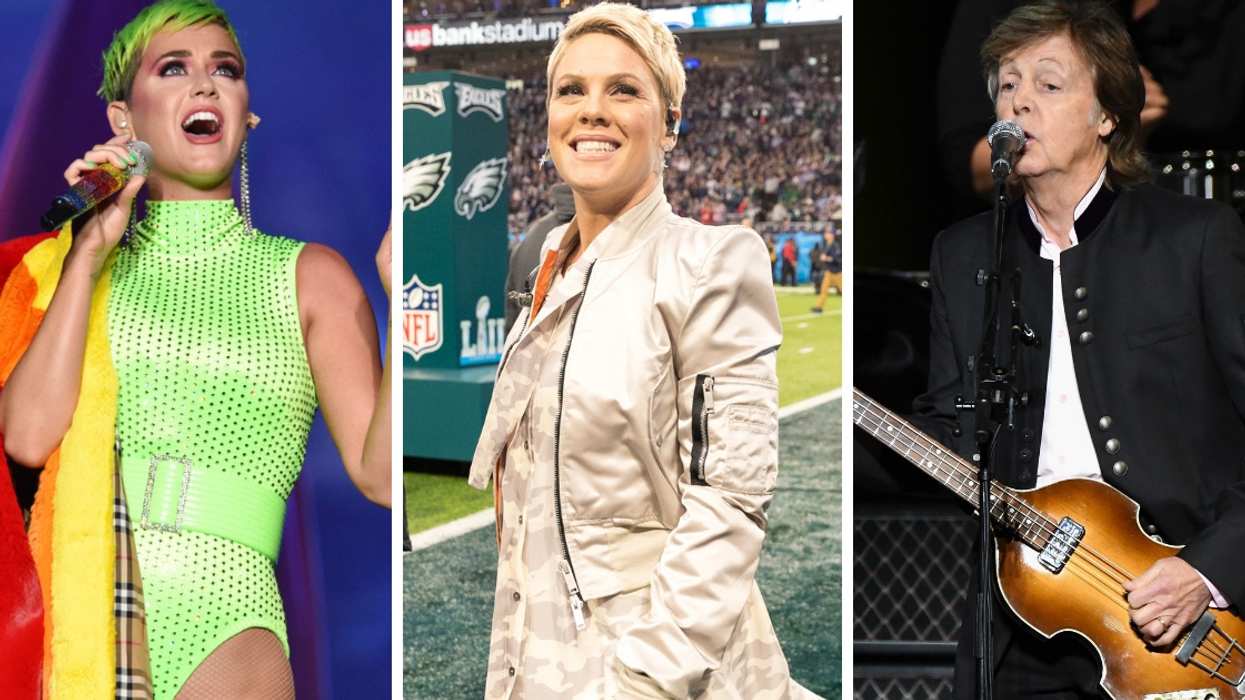
Hundreds of artists have signed a letter threatening a boycott if SiriusXM's parent company, Liberty Media, doesn't back down from opposing the Music Modernization Act.
The act, which was expected to pass through Congress, streamlines royalty payments in the new age of digital technology, but it seems SiriusXM is objecting to a small section that would have the satellite radio company paying royalties on recordings dating before 1972.
That's a whole lot of songs and a whole lot of money the company is hoping to skip out on paying, but not if stars like Paul McCartney, P!nk, Stevie Nicks, Sia, Carly Simon, Gloria Estefan, Mick Fleetwood, Don Henley, Max Martin, and Katy Perry can help it.
The letter read, in part:
I'm writing you with grave concern about SiriusXM's opposition to the Music Modernization Act (Classics Act included).
We are all aware of your company's objections and trepidation but let me say that this is an opportunity for SiriusXM to take a leadership position. As you are aware, 415 Representatives and 76 Senators have already cosponsored the MMA along with industry consensus. It's SiriusXM vs all of us. We can either fight to the bitter end or celebrate this victory together. Rather than watch bad press and ill will pile up against SiriusXM, why not come out supporting the most consequential music legislation in 109 years? We do not want to fight and boycott your company but we will as we have other opponents. Stand with us! Be brave and take credit for being the heroes who helped the MMA become historic law! Momentum is building against SiriusXM and you still have an opportunity to come out on the right side of history. We look forward to your endorsement but the fire is burning and only you can put this out.
SiriusXM resoponded with a letter of their own:
Over the past several weeks, we have been the subject of some stinging attacks from the music community and artists regarding our views on the Music Modernization Act. Contrary to new reports and letters, this is really not about a SiriusXM victory, but implementing some simple, reasonable and straightforward amendments to MMA. There is nothing in our "asks" that gut the MMA or kills the Act. So let's talk about the substance of the amendments we propose, because we truly do not understand the objections or why these concepts have incited such a holy war.ontrary to the accusations, SiriusXM has proposed three simple amendments to the MMA.
First, SiriusXM has asked that the CLASSICS Act recognize that it has already licensed all of the pre-1972 works it uses. This amendment would ensure that artists – the people who are supposed to be at the heart of the MMA – receive 50% of the monies under those existing licenses. Is that unfair? Just today, Neil Diamond wrote in the LA Times that: "I receive a small amount of songwriting royalties, but no royalties as the recording artist." How can that happen? To date, SiriusXM has paid nearly $250 million dollars in pre-'72 royalties to the record labels. We want to make sure that a fair share of the monies we have paid, and will pay, under these licenses gets to performers. Without this provision, artists may never see any of the money SiriusXM paid, and will pay, for the use of pre-1972 works. Artists not getting paid hurts our business!
Second, Sirius XM thinks that the fair standard to use in rate setting proceedings is the standard that Congress chose in 1995 and confirmed again in 1998 – which is called the 801(b) standard. However, we are willing to move the "willing buyer/willing seller" standard contained in the MMA. In exchange, we have asked for the same concession that the MMA grants to other digital music services, but we were left out of — simply that the rates that were set last year for five years now apply for ten years. We thought this was a fair compromise when we read the "new" MMA that was released this weekend by the Senate, and are willing to live by that compromise.
Third, SiriusXM is asking the simple question: "Why are we changing the rate court evidence standard for musical compositions in this legislation so that it gives another advantage to broadcasters over satellite radio and streaming services?" There is no policy rationale for this change to tilt the playing field further in their favor, and frankly no one has been able to explain it to us. It is only fair that we debate why the change to Section 114(i) is in the MMA.
Did you all catch that? It sounds like lawyer speak for "we don't really want to say where we stand."

It seems all the letters were for naught. The Music Modernization Act passed in the U.S. Senate.
It was time to celebrate and dance in the streets.
As the saying goes, honest pay for honest work.