



November, 2001, LOS ANGELES - As if some atavistic urge compels me, I always seem to have a need to go to London near the end of the year. I love the crisp, bracing air; the holiday hubbub; the sound of English spoken as in Merchant-Ivory movies. This year, the urge was even more compelling. The trip to London became symbolic. It was an assertion of defiance against the terrorists. I wasn't going to be intimidated. Vigilant - yes. Careful - surely. Anxious - perhaps. I wasn't going to let the terrorists change my plans. Besides, the British people and government have been our strongest allies in the effort against terrorism. Prime Minister Tony Blair has been a true stalwart.
We got to the airport three hours before departure. As I had anticipated, the security was tedious and time-consuming. But, I was glad. The hassle was reassuring. We felt exceptionally well examined and very secure. The trip was gratefully uneventful.
The reward for my determination was a trip filled with lucky, out of the blue experiences - like a joy ride up to a spectacular view of London on our first afternoon. Last year, when we tried to take a ride on the Millennium Eye, the giant Ferris wheel on the south bank of the River Thames, it was closed because of wind conditions. And all tickets for future opportunities during our stay were sold out. This year, we just walked up to the ticket booth, bought our tickets, and got in the glass capsule that leisurely lifted us up to the highest vantage point in all London. The air was crystalline and the vista was sharp and clear. The sky churned with dramatic clouds, just like a Gainsborough painting. And all of London lay before us from the office towers of Canary Wharf off in the distance, to stately Tower Bridge rising up across the Thames, to the classic dome of St. Paul's Cathedral, all the way down to familiar old Big Ben just below us. It was a sensational experience.
 I had old English five pound and ten pound notes that had gone out of circulation from some previous trip. Banks all over London wouldn't exchange them. I had to go to the Bank of England itself in the financial district of the city known simply as the City. We got there before it opened so we decided to roam about the area admiring the imposing, gray architecture of the City. Serendipitously, we chanced upon a new men's shirt shop that had just opened its doors for the first time. It was an exclusive shop that catered to the financial people of the district. As a celebration special, they were throwing in a selection of handsome ties for the price of a shirt. What a bargain! I stepped in and they promptly made a sale. Now I own a shirt and tie just like the ones worn by those British bankers.
The Bank of England should be open by now. We crossed the street and walked past the now open bronze doors of the building where British banking began three centuries ago. A stern looking security guard stood blocking entry at a second set of doors. As I approached, his eyes narrowed. They seemed to penetrate right through me. Why is he scrutinizing me like that, I wondered. I'm not going to rob his bank. He stared intently at me until I stepped up to him. Then he demanded, "You're on Star Trek, aren't you?" I was completely thrown off balance. That phrase has been like "open sesame" for me. "I love your show," he stated. Star Trek has magically opened doors for me into some of the most inaccessible places in the world. The stern guard, still unsmiling, said, "Follow me, sir." He courteously escorted into an imposing marble domed banking hall. My outdated bills were graciously exchanged for me. Then my stern friend asked, "Would you like to visit our Museum of Banking, sir?" Would I? Door after unanticipated doors opened for me into a museum of the history, not only of the Bank of England, but of banking itself in England. That was a fascinating and educational afternoon - and totally unexpected.
London, for me, is theater land. My main mission, when I'm in London, is to immerse myself in some of the best theater in the English language. I spent every night in a theater. And every night was rich and engaging. There was a perfect production of Noel Coward's "Private Lives," starring Alan Rickman, who, you might recall, played the character based on Mr. Spock in "Galaxy Quest." At the National Theater complex, I saw a big and brilliant production of John Osborne's "Luther" in the Olivier Theater and in the Lyttleton, a sensational new play, "Mother Clapp's Molley House" about commerce and prostitution in the 18th century and today. There were revivals galore - a wonderful production of "Joe Egg," a hilarious production of "The Royal Family" starring Judi Dench, and a powerful production of Lillian Hellman's "Little Foxes" with a commanding performance by an actor named Penelope Wilton. British actors seem to have a gift for playing characters of the American south. But, the serendipity for me, was in the sold out hit, Lerner and Lowe's "My Fair Lady" with Jonathan Pryce playing Professor Henry Higgins. I didn't recognize the names of the actors playing Eliza, a Martine McCutcheon, and Doolittle, played by a Dennis Waterman. The reviews that were on display outside the Drury Lane Theater gave their performances glowing raves. You can imagine my disappointment when we arrived at the theater to learn that understudies were going on that performance for Eliza and Doolittle. Thank goodness, Jonathan Pryce was there to play Henry Higgins. We settled down in our seats not without some grumbling.
The overture started up and the Cockney denizens of Covent Garden sauntered out to set the stage to perform a delightfully choreographed dance prelude. It seemed to be getting off to a good start. Eliza entered. Her first sounds of Cockney seemed "spot on" as the British say. Through her smudge-smeared make-up, one could see that she had a beautiful face. Her first exchange with Higgins went perfectly. Her first song number, "Wouldn't It Be Loverly?" revealed a gorgeous voice. She was wonderful!
 When the character of her father, Doolittle, entered, we knew immediately that he was a fun-loving, conniving witted, energetic, Cockney low-life. He had the cockiness of a bantam rooster on coke. Then he exploded on stage with his first production number, "With a Little Bit of Luck." He brought the house down! Both understudies were extraordinary! I couldn't imagine the regular actors topping their performances. My bravo, bravo, bravos go to Kerry Ellis as a brilliant Eliza and to David Shaw-Parker as the best Doolittle I have ever seen. "My Fair Lady" was an unforgettable experience. And yes, as we expected, Jonathan Pryce was good as well. But the understudies, Ellis and Shaw-Parker, were our serendipitous, unexpected good fortune.
London is a place of magic that passes too quickly. All too soon, we were in a London taxi headed back to Heathrow Airport for the trip home. The driver seemed eager to chat. He talked about current events. He firmly believed that the Taliban would fall soon enough. He lamented the absence of tourists in London. He told us that the English like to take their holidays in Spain. He nattered on and on. When he said "holiday in Spain," I suddenly realized. His accent was perfect Cockney! As a matter of fact, we had Doolittle himself driving us to the airport! As we neared our terminal, he said, "with a little bit o' luck, your flight will take off on time." I almost expected him to break out in song. He was the perfect driver to see us off back to Los Angeles, California. Ah, I shall look forward to the next serendipitous return to London.

Twitter user @Rich_Cooper stated:
"Dear feminists. You either get equality or chivalry. You can't have both."
One user responded:
"I'll take equality. I don't need special treatment."
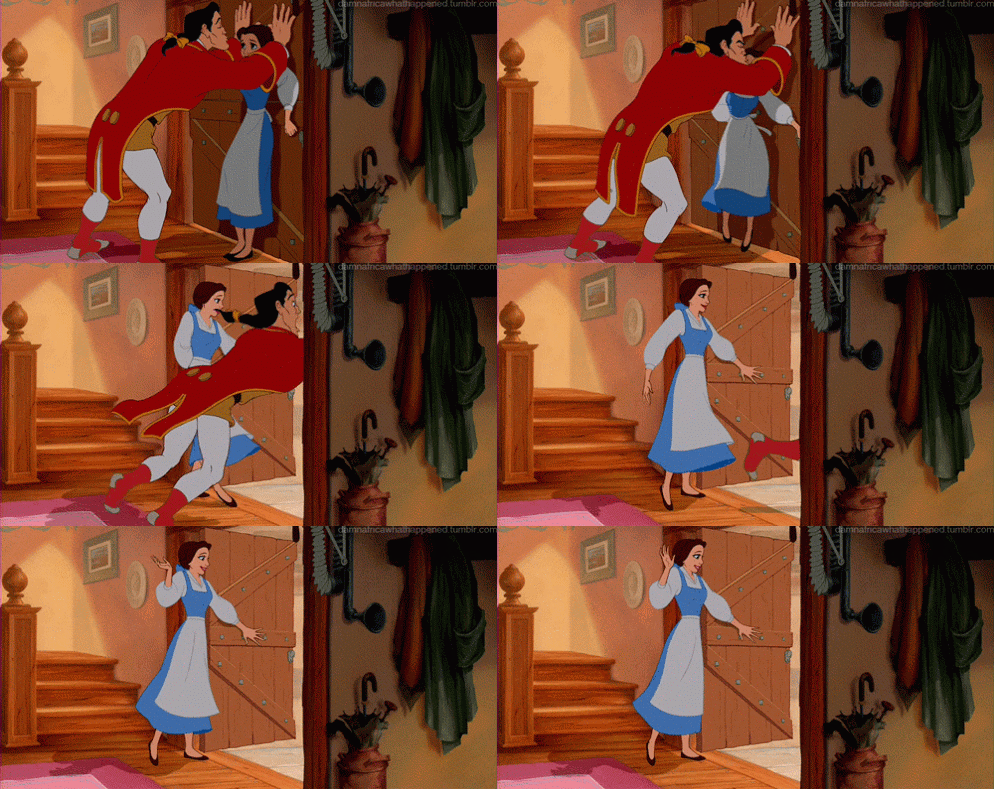
Cooper's rhetorical question did not go over so well. Both women and men expressed their disdain for his message.
One male user observed that chivalry was irrelevant and treating everyone with kindness and respect was compulsory.
"What people care about is caring, empathic [sic], considerate, thoughtful people, NOT whether THEIR door is held for them or THEIR meal is paid for them."
"Are there gender stereotypes in het[erosexual] dating? Sure. But that's separate from being a warm, giving, caring, grounded person."
Some women got right down to the point.
The notion of chivalry and equality are mutually exclusive and not a lot of people thought it was a major priority for feminists.
Common courtesy is not chivalry.
This user pointed out the fact that chivalry stems from a history of men outdoing other men. The concept had very little to do with women.
"Chivalry is a medieval concept of men dressing to impress other men. It has little to do with equality."
"Some men were on top, other men were beneath them. Historically, women were rarely invited into the process."
Neil Bradley described the outdated concept of chivalry as one that implies men being superior to women in a September 8, 2017, article for Medium publications.
"Examples: opening the door for a woman, paying for a woman's meal, gesturing for a woman to go first. The justification is either that women are not physically as strong (to open the door), able to provide (pay for their own meal), or are more deserving of compassion than men (allowing women to go first)."
Bradley also added that he wants to treat others the way he wants to be treated and asked if that approach should be motivated by chivalry or equality.
"If the genders are to be considered equal and treated equally, how a man treats a woman will essentially be the same as how a man treats a man."
"The obligation to open the door, pay for the meal, and let women go first vanishes. Men do not do this to other men, therefore why do it for women?"
His final take was that the two concepts can't co-exist. Either one is chivalrous or treats everyone as equals.
At the end of the day, people were happy to show chivalry the door.
H/T - GettyImages, Twitter, Indy100, Medium
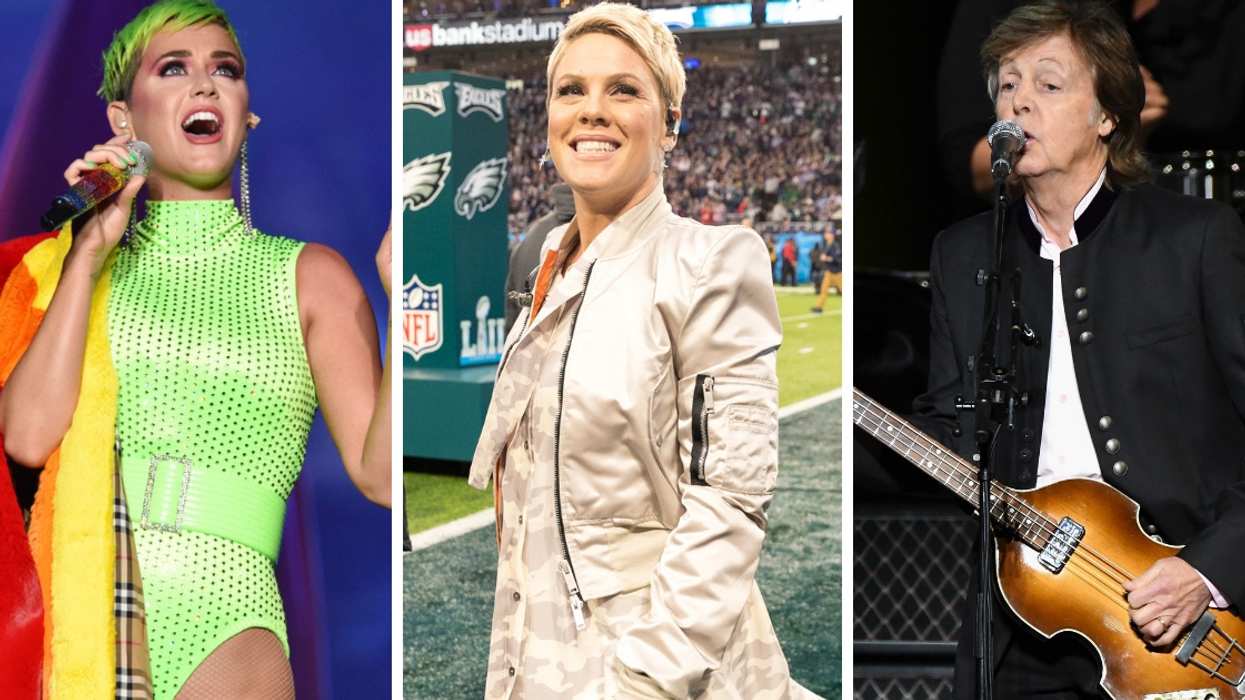
Hundreds of artists have signed a letter threatening a boycott if SiriusXM's parent company, Liberty Media, doesn't back down from opposing the Music Modernization Act.
The act, which was expected to pass through Congress, streamlines royalty payments in the new age of digital technology, but it seems SiriusXM is objecting to a small section that would have the satellite radio company paying royalties on recordings dating before 1972.
That's a whole lot of songs and a whole lot of money the company is hoping to skip out on paying, but not if stars like Paul McCartney, P!nk, Stevie Nicks, Sia, Carly Simon, Gloria Estefan, Mick Fleetwood, Don Henley, Max Martin, and Katy Perry can help it.
The letter read, in part:
I'm writing you with grave concern about SiriusXM's opposition to the Music Modernization Act (Classics Act included).
We are all aware of your company's objections and trepidation but let me say that this is an opportunity for SiriusXM to take a leadership position. As you are aware, 415 Representatives and 76 Senators have already cosponsored the MMA along with industry consensus. It's SiriusXM vs all of us. We can either fight to the bitter end or celebrate this victory together. Rather than watch bad press and ill will pile up against SiriusXM, why not come out supporting the most consequential music legislation in 109 years? We do not want to fight and boycott your company but we will as we have other opponents. Stand with us! Be brave and take credit for being the heroes who helped the MMA become historic law! Momentum is building against SiriusXM and you still have an opportunity to come out on the right side of history. We look forward to your endorsement but the fire is burning and only you can put this out.
SiriusXM resoponded with a letter of their own:
Over the past several weeks, we have been the subject of some stinging attacks from the music community and artists regarding our views on the Music Modernization Act. Contrary to new reports and letters, this is really not about a SiriusXM victory, but implementing some simple, reasonable and straightforward amendments to MMA. There is nothing in our "asks" that gut the MMA or kills the Act. So let's talk about the substance of the amendments we propose, because we truly do not understand the objections or why these concepts have incited such a holy war.ontrary to the accusations, SiriusXM has proposed three simple amendments to the MMA.
First, SiriusXM has asked that the CLASSICS Act recognize that it has already licensed all of the pre-1972 works it uses. This amendment would ensure that artists – the people who are supposed to be at the heart of the MMA – receive 50% of the monies under those existing licenses. Is that unfair? Just today, Neil Diamond wrote in the LA Times that: "I receive a small amount of songwriting royalties, but no royalties as the recording artist." How can that happen? To date, SiriusXM has paid nearly $250 million dollars in pre-'72 royalties to the record labels. We want to make sure that a fair share of the monies we have paid, and will pay, under these licenses gets to performers. Without this provision, artists may never see any of the money SiriusXM paid, and will pay, for the use of pre-1972 works. Artists not getting paid hurts our business!
Second, Sirius XM thinks that the fair standard to use in rate setting proceedings is the standard that Congress chose in 1995 and confirmed again in 1998 – which is called the 801(b) standard. However, we are willing to move the "willing buyer/willing seller" standard contained in the MMA. In exchange, we have asked for the same concession that the MMA grants to other digital music services, but we were left out of — simply that the rates that were set last year for five years now apply for ten years. We thought this was a fair compromise when we read the "new" MMA that was released this weekend by the Senate, and are willing to live by that compromise.
Third, SiriusXM is asking the simple question: "Why are we changing the rate court evidence standard for musical compositions in this legislation so that it gives another advantage to broadcasters over satellite radio and streaming services?" There is no policy rationale for this change to tilt the playing field further in their favor, and frankly no one has been able to explain it to us. It is only fair that we debate why the change to Section 114(i) is in the MMA.
Did you all catch that? It sounds like lawyer speak for "we don't really want to say where we stand."

It seems all the letters were for naught. The Music Modernization Act passed in the U.S. Senate.
It was time to celebrate and dance in the streets.
As the saying goes, honest pay for honest work.