



Michael C. Hall Is Starring In A One-Night-Only Broadway Musical About Skittles—And No, We're Not Making This Up
Super Bowl Sunday: it's the only time when commercials are more popular than the show they interrupt. However, this year's best ad might not even be on TV.
Funny, irreverent, and sometimes controversial, Super Bowl ads have become as much of an event as the big game itself. Even those who don't watch football will tune in and watch as brands fight it out for the most talked about commercial of the year.
For advertisers though, getting your ad in front of one of the largest television audiences out there doesn't come cheap. A 30-second spot for this year could cost up to $5 million!
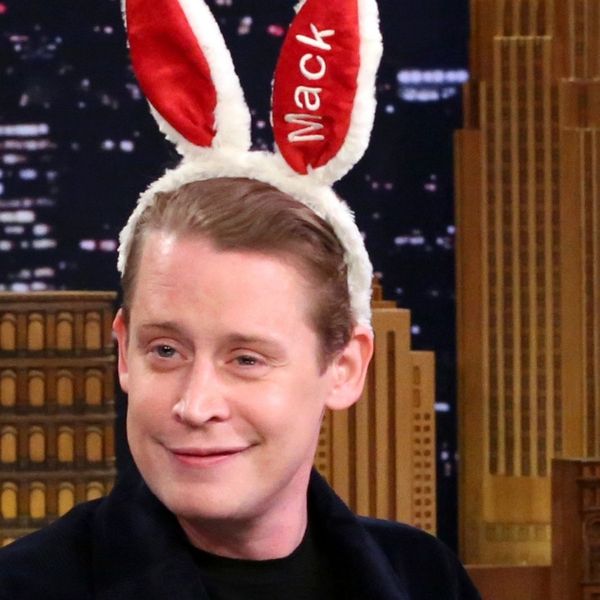
Candy maker Skittles decided to skip the Super Bowl and head for Broadway. For one-night-only, Skittles The Musical will appear on Broadway starring everyone's favorite serial killer, Dexter actor Michael C. Hall. No, we're not kidding.
The concept has so many people scratching their heads that Skittles needed to make another ad just to explain it.
Skittles The Musical ))) Starring Michael C. Hall www.youtube.com
Anxious over appearing in the musical Hall sits down with a therapist, who like the rest of us is not exactly sure what it is. Hall explains the 30 minute advertisement is a real musical, you even have to buy tickets to go see it.
At one point Skittles even takes a self-deprecating jab at themselves and Hall, implying the musical is a terrible career decision.
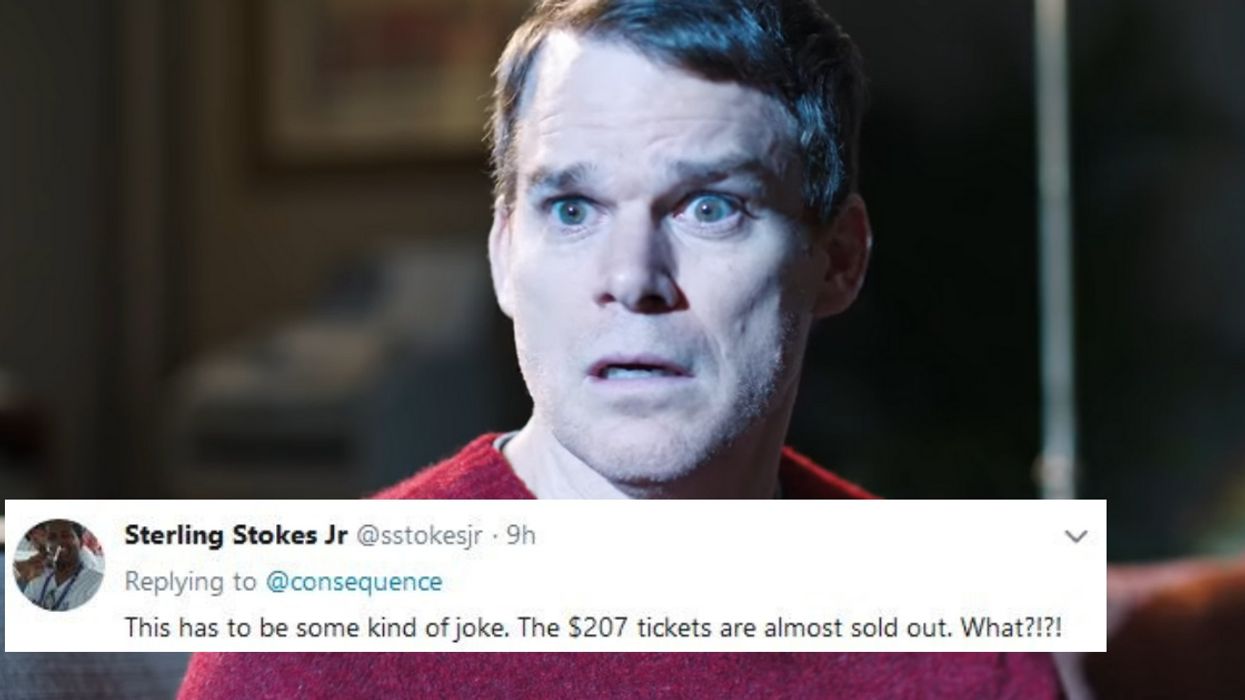
After all, who is going to pay $207 a ticket to go see a 30 minute advertisement for Skittles?
A whole lot of people apparently
Tickets to the performance at the Town Hall theater in New York are almost sold out. People may not know what's going on, but they are ready to taste the rainbow.
On its surface Skittles The Musical may just look like an over the top gag from a brand known for its unusual marketing, but Skittles recruited some serious Broadway talent to put it together including playwright Will Eno and a cast straight from some of the biggest shows on Broadway.
According to Skittles the show will take "an absurdly self-reflective look at consumerism and the ever-increasing pervasiveness of brand advertising in our lives."
And if that wasn't enough Skittles will also be donating all the proceeds from the show to Broadway Cares/Equity Fights AIDS. Skittles parent company will match that donation up to $50,000. You had our attention Skittles, now you have our interest.
There is no telling how a commercial/Broadway musical from the bizarre minds over at Skittles will turn out, but it's guaranteed to be an performace like Broadway has never seen before.
Katy Perry, P!nk, Paul McCartney And More Sign Letter Threatening To Boycott SiriusXM Radio
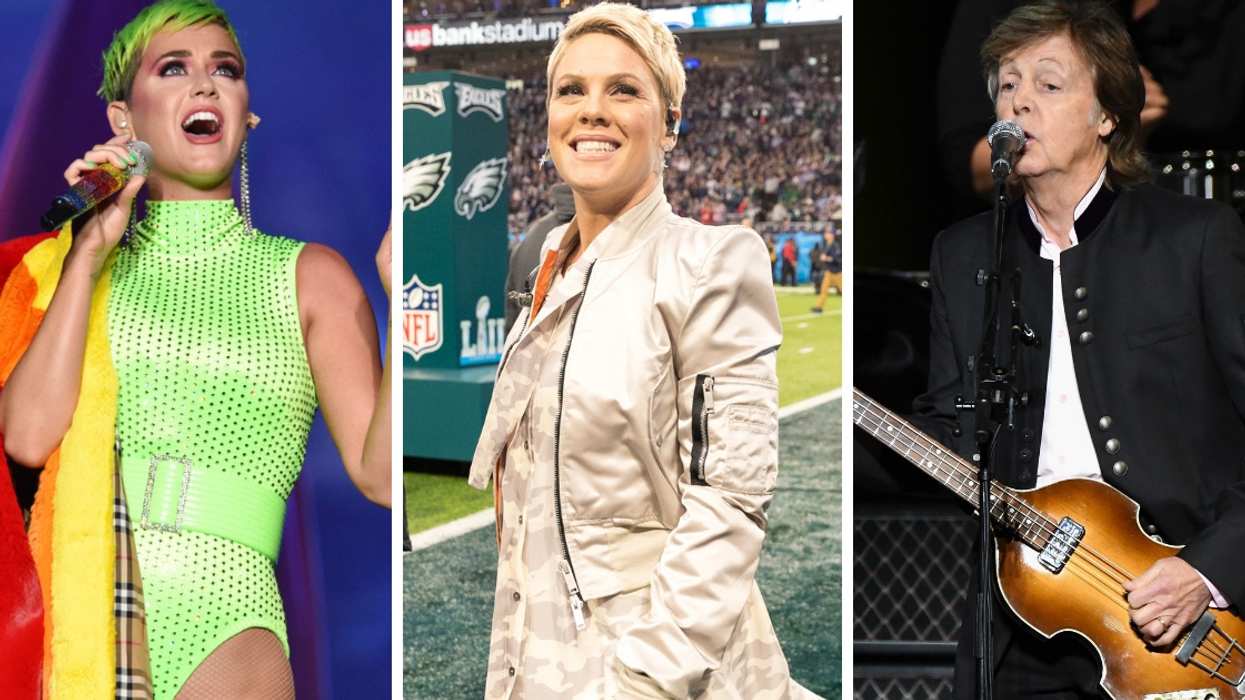
Hundreds of artists have signed a letter threatening a boycott if SiriusXM's parent company, Liberty Media, doesn't back down from opposing the Music Modernization Act.
The act, which was expected to pass through Congress, streamlines royalty payments in the new age of digital technology, but it seems SiriusXM is objecting to a small section that would have the satellite radio company paying royalties on recordings dating before 1972.
That's a whole lot of songs and a whole lot of money the company is hoping to skip out on paying, but not if stars like Paul McCartney, P!nk, Stevie Nicks, Sia, Carly Simon, Gloria Estefan, Mick Fleetwood, Don Henley, Max Martin, and Katy Perry can help it.
The letter read, in part:
I'm writing you with grave concern about SiriusXM's opposition to the Music Modernization Act (Classics Act included).
We are all aware of your company's objections and trepidation but let me say that this is an opportunity for SiriusXM to take a leadership position. As you are aware, 415 Representatives and 76 Senators have already cosponsored the MMA along with industry consensus. It's SiriusXM vs all of us. We can either fight to the bitter end or celebrate this victory together. Rather than watch bad press and ill will pile up against SiriusXM, why not come out supporting the most consequential music legislation in 109 years? We do not want to fight and boycott your company but we will as we have other opponents. Stand with us! Be brave and take credit for being the heroes who helped the MMA become historic law! Momentum is building against SiriusXM and you still have an opportunity to come out on the right side of history. We look forward to your endorsement but the fire is burning and only you can put this out.
SiriusXM resoponded with a letter of their own:
Over the past several weeks, we have been the subject of some stinging attacks from the music community and artists regarding our views on the Music Modernization Act. Contrary to new reports and letters, this is really not about a SiriusXM victory, but implementing some simple, reasonable and straightforward amendments to MMA. There is nothing in our "asks" that gut the MMA or kills the Act. So let's talk about the substance of the amendments we propose, because we truly do not understand the objections or why these concepts have incited such a holy war.ontrary to the accusations, SiriusXM has proposed three simple amendments to the MMA.
First, SiriusXM has asked that the CLASSICS Act recognize that it has already licensed all of the pre-1972 works it uses. This amendment would ensure that artists – the people who are supposed to be at the heart of the MMA – receive 50% of the monies under those existing licenses. Is that unfair? Just today, Neil Diamond wrote in the LA Times that: "I receive a small amount of songwriting royalties, but no royalties as the recording artist." How can that happen? To date, SiriusXM has paid nearly $250 million dollars in pre-'72 royalties to the record labels. We want to make sure that a fair share of the monies we have paid, and will pay, under these licenses gets to performers. Without this provision, artists may never see any of the money SiriusXM paid, and will pay, for the use of pre-1972 works. Artists not getting paid hurts our business!
Second, Sirius XM thinks that the fair standard to use in rate setting proceedings is the standard that Congress chose in 1995 and confirmed again in 1998 – which is called the 801(b) standard. However, we are willing to move the "willing buyer/willing seller" standard contained in the MMA. In exchange, we have asked for the same concession that the MMA grants to other digital music services, but we were left out of — simply that the rates that were set last year for five years now apply for ten years. We thought this was a fair compromise when we read the "new" MMA that was released this weekend by the Senate, and are willing to live by that compromise.
Third, SiriusXM is asking the simple question: "Why are we changing the rate court evidence standard for musical compositions in this legislation so that it gives another advantage to broadcasters over satellite radio and streaming services?" There is no policy rationale for this change to tilt the playing field further in their favor, and frankly no one has been able to explain it to us. It is only fair that we debate why the change to Section 114(i) is in the MMA.
Did you all catch that? It sounds like lawyer speak for "we don't really want to say where we stand."
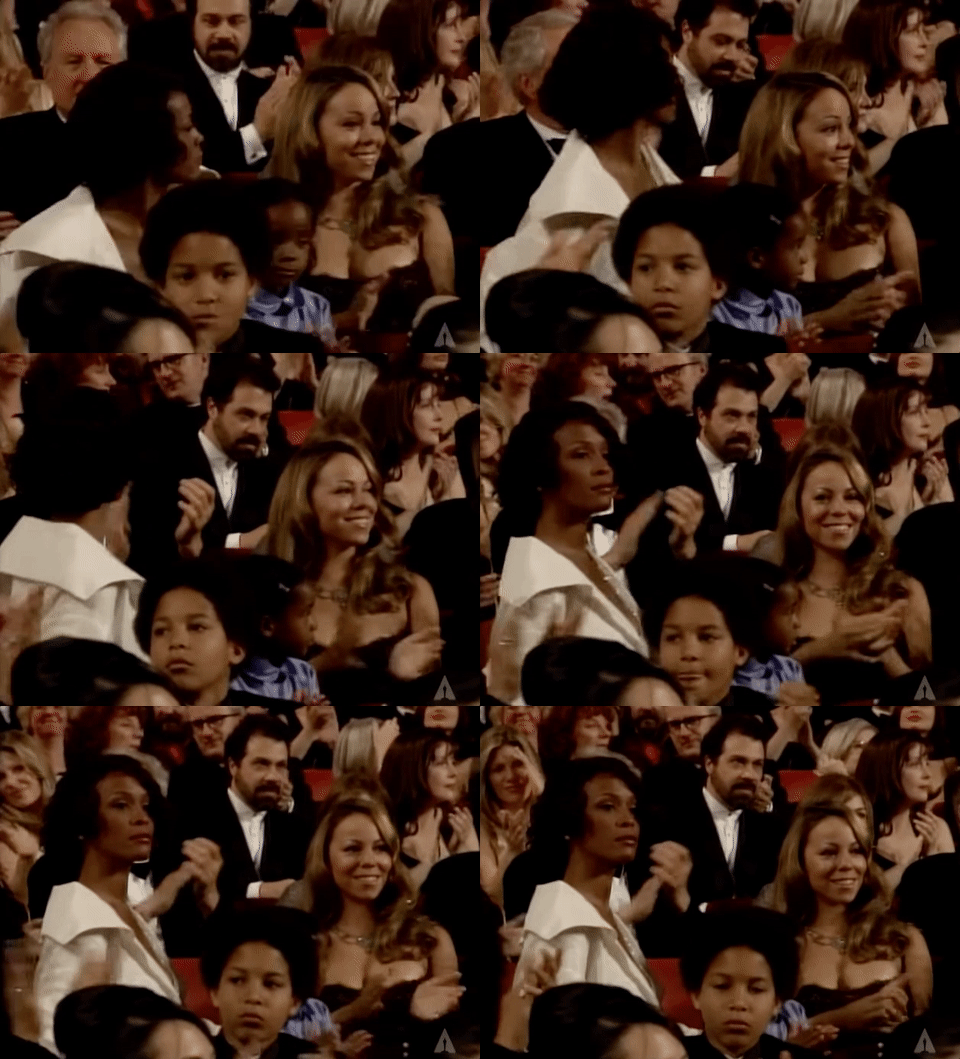
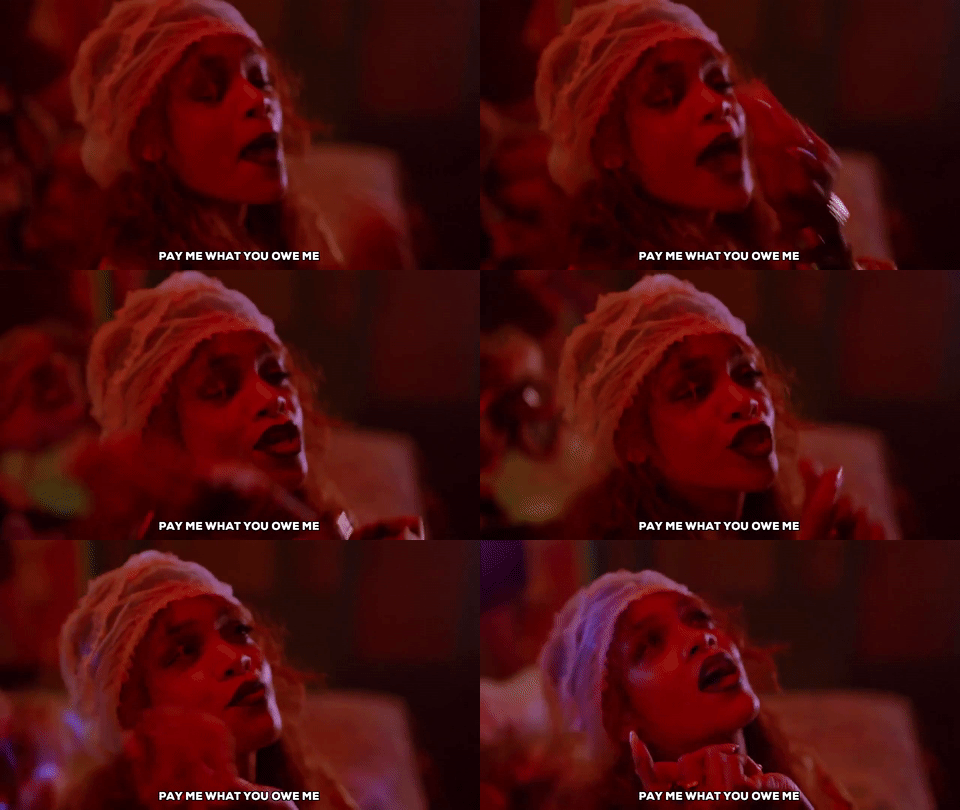
It seems all the letters were for naught. The Music Modernization Act passed in the U.S. Senate.
It was time to celebrate and dance in the streets.
As the saying goes, honest pay for honest work.
Woman Was Fired For Refusing To Wear A Bra At Work—And Now She's Suing
Christina Schell, from Alberta, Canada, stopped wearing bras three years ago citing health reasons.
While Schell did not specify the health reasons, she did state she finds them to be "horrible."
But after her refusal to sign or adhere to a new enforced dress code policy to wear a bra or tank top under her work shirt at a golf course grill where she worked, Schell was promptly fired.
Now, the 25-year-old has filed a human rights violation against the Osoyoos Golf Club, Osoyoos, in British Columbia, Canada.
Schell said:
"I don't think any other human being should be able to dictate another person's undergarments."
When she asked the general manager, Doug Robb, why she had to comply, the manager told her the mandate was for her protection.
Robb allegedly said:
"I know what happens in golf clubs when alcohol's involved."
After losing her job, she brought the case to the British Columbia Human Rights Tribunal and told them the club's dress code was discriminatory because the rule didn't apply towards male employees.
Schell told CBC:
"It's gender-based and that's why it's a human rights issue. I have nipples and so do the men."
David Brown, an employment lawyer in Kelowna, BC, said gender-specific dress codes could be viewed as discriminatory under the BC Human Rights Code.
He stated:
"It's an interesting question as to whether or not an employer can dictate the underwear that women can wear, but they don't say anything about the underwear that men can wear, and does that create an adverse impact on the individual?"
Brown added:
"If this policy is found to be discrimination, the next question is does the employer have a bonafide occupational requirement to essentially impose this on the individual?"
"I'm kind of scratching my head as to what that occupational requirement would be."
As for the tank top option, due to working under oftentimes extreme heat serving tables outsides, Schell did not want to wear another layer of clothes just because of her gender.
Schell said:
"It was absurd. Why do you get to dictate what's underneath my clothes?"
Employment lawyer Nadia Zaman told CBC that the club can enforce a gender-specific policy as they deem necessary as long as the establishment can prove it is for the occupational safety of its workers.
But the attorney questioned if forcing female employees to wear a bra was applicable in this case.
Zaman stated:
"If they simply require that female employees wear a bra but then they don't have a similar requirement for males, and they can't really justify that … then there is a risk that their policy's going to be deemed to be discriminatory."
Under British Columbia's discrimination law, it is illegal for employers:
'to discriminate against any individual because of his race, color, religion, sex, or national origin'.
McDonald's employee Kate Gosek, 19, agrees with Schell in that the dress code is "unnecessary." She too was harassed by her employers at a McDonald's in Selkirk, Manitoba, over refusing to wear a bra.
"She just told me that I should put on a bra because, McDonald's—we are a polite restaurant and no one needs to see that."
Schell's case sparked plenty of debates on Twitter.
Schell is not alone in her disdain for bras.
Schell is still waiting to hear from the Human Rights Commission about her claim.
H/T - GettyImages, Twitter, Indy100, CBC